12:10 PM
 crkota


A perfect vision of paradise, where the tropical splendour of the Maldives combines with world-class hospitality. This is a sybaritic combination of three distinct resort experiences on two islands, surrounded by a coral reef and lagoon. Winner of 'Best Hotel in the World' at the 2005 Sunday Times Travel Awards, the resort is renowned for its attentive service and fine cuisine, along with an abundance of leisure facilities. Beaches of soft white sand fringed by palms lead to the Indian Ocean. Outstanding diving in the world's most remarkable waters is on offer, as well as a wealth of other sports.
Indulge yourself in the two spas, fine food and water sports. Gourmets will love discovering the fine cuisine, which ranges from seafood specialties, Japanese, international and spa cuisine as well as memorable gourmet food and wine dinners in the resort’s extensive wine cellar. Remember to take time out to explore some of the resort’s 5000 bottles of wine, which are lovingly selected by the resident Sommelier.
Indulge yourself in the two spas, fine food and water sports. Gourmets will love discovering the fine cuisine, which ranges from seafood specialties, Japanese, international and spa cuisine as well as memorable gourmet food and wine dinners in the resort’s extensive wine cellar. Remember to take time out to explore some of the resort’s 5000 bottles of wine, which are lovingly selected by the resident Sommelier.
source
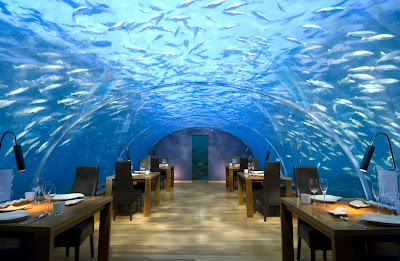
Discover barefoot luxury at the award-winning Conrad Maldives Rangali Island resort, set on two private islands among miles of idyllic white-sand beach and unspoilt reef. Arrive at our Maldives hotel in style in a seaplane over the lagoon, dine in the world's first all-glass, undersea restaurant and indulge in luxurious spa therapies.
Sited in a picturesque corner of the Maldives, our luxury Maldives resort is spread across two islands, surrounded by a vibrant coral reef and lagoon. Twice voted 'Best Hotel in the World' and several times 'Best Resort', our Maldives hotel boasts 50 luxurious water villas, 79 exotic beach villas and 21 fabulous spa water villas with private treatment rooms. Scattered in the tropical gardens on Rangalifinolhu Island, the elegant beach villas at our hotel in Maldives are just steps away from the beach. Stunning living areas are arranged around courtyards with a fountain, while huge outdoor garden-bathrooms offer a taste of the tropics, enormous glass doors substitute for walls and ingenious landscaping ensures total seclusion. Deluxe Beach Villas also have a private plunge pool and garden.
Rangali Island is home to 50 water villas of ever increasing degrees of luxury. The elegant villas set on stilts over the ocean offer sweeping views of turquoise surrounds complemented by iridescent sunsets. With ocean view baths, Philippe Starck fittings, private sun decks, espresso machines and Bulgari bathroom goodies, it is almost impossible to imagine anything more beautiful. Guests staying in our Maldives hotel's Superior and Deluxe Water Villas will love the Jacuzzi pool on the sun deck, while Premier Water Villas have an additional jacuzzi in the bathroom with in-built satellite TV. Two Sunset Water Villas stand in a secluded part of the lagoon and offer a private butler, glass-floored living room, rotating bed and ocean pool.
Conrad Maldives Rangali Island can only be reached via seaplane from Male. Our reservations team will be in touch upon receiving a reservation to discuss and organise seaplane transfers and overnight accommodation options in Male if required.
Directions from Male International Airport
Distance from resort: 96 km. Flying time: 30 min. Directions: All guests are met by our representative at Male International Airport and transferred to the Conrad Maldives Rangali Island on Hulhule Island by a 30-minute seaplane ride.
Transportation to and from the airport
The resort automatically arranges seaplane transfers on receipt of your flight details. These do not operate at night so resort staff will arrange an overnight stay in Male (at an extra charge) for guests with early departures or late arrivals. The resorts staff collects guests at the airport and accompanies them by shuttle bus to the separate Seaplane Terminal where there is a private Conrad lounge for guests.
Sited in a picturesque corner of the Maldives, our luxury Maldives resort is spread across two islands, surrounded by a vibrant coral reef and lagoon. Twice voted 'Best Hotel in the World' and several times 'Best Resort', our Maldives hotel boasts 50 luxurious water villas, 79 exotic beach villas and 21 fabulous spa water villas with private treatment rooms. Scattered in the tropical gardens on Rangalifinolhu Island, the elegant beach villas at our hotel in Maldives are just steps away from the beach. Stunning living areas are arranged around courtyards with a fountain, while huge outdoor garden-bathrooms offer a taste of the tropics, enormous glass doors substitute for walls and ingenious landscaping ensures total seclusion. Deluxe Beach Villas also have a private plunge pool and garden.
Rangali Island is home to 50 water villas of ever increasing degrees of luxury. The elegant villas set on stilts over the ocean offer sweeping views of turquoise surrounds complemented by iridescent sunsets. With ocean view baths, Philippe Starck fittings, private sun decks, espresso machines and Bulgari bathroom goodies, it is almost impossible to imagine anything more beautiful. Guests staying in our Maldives hotel's Superior and Deluxe Water Villas will love the Jacuzzi pool on the sun deck, while Premier Water Villas have an additional jacuzzi in the bathroom with in-built satellite TV. Two Sunset Water Villas stand in a secluded part of the lagoon and offer a private butler, glass-floored living room, rotating bed and ocean pool.
Conrad Maldives Rangali Island can only be reached via seaplane from Male. Our reservations team will be in touch upon receiving a reservation to discuss and organise seaplane transfers and overnight accommodation options in Male if required.
A breathtaking 30-minute seaplane flight over the islands brings you from Male International Airport to the Conrad Maldives Rangali Island. The resort will automatically arrange seaplane transfers on receipt of your flight details. Transfers do not operate at night, so resort staff will arrange an overnight stay in Male (at an extra charge) for guests with early departures or late arrivals. The Conrad Maldives Rangali Island resort team collects guests at the airport and accompanies them by shuttle bus to the separate Seaplane Terminal where there is an exclusive Conrad lounge for guests.
Note: Seaplane transfer and Male accommodation are chargeable. The seaplane transfer is charged at US$420 per person return. Children aged between 2 and 12 receive a 50% discount.
Note: Seaplane transfer and Male accommodation are chargeable. The seaplane transfer is charged at US$420 per person return. Children aged between 2 and 12 receive a 50% discount.
Directions from Male International Airport
Distance from resort: 96 km. Flying time: 30 min. Directions: All guests are met by our representative at Male International Airport and transferred to the Conrad Maldives Rangali Island on Hulhule Island by a 30-minute seaplane ride.
Transportation to and from the airport
The resort automatically arranges seaplane transfers on receipt of your flight details. These do not operate at night so resort staff will arrange an overnight stay in Male (at an extra charge) for guests with early departures or late arrivals. The resorts staff collects guests at the airport and accompanies them by shuttle bus to the separate Seaplane Terminal where there is a private Conrad lounge for guests.
What to do:
Discover Snorkeling
Anyone who has yet to experience snorkelling and does not want to pass up a great opportunity to discover the underwater world should not miss this excursion.
Snorkeling Hopping
A trip on the resort speedboat to the best snorkelling sites on the nearby coral reefs.
Snorkeling Safari
A tour of some of our favourite snorkelling sites to see turtles, sharks and possibly even a manta ray.
Sunrise Snorkeling Hopping
A very special trip. Head off by speedboat in the early morning and visit the open-water reefs of South Ari Atoll before experiencing the three best snorkelling venues, each with its own special characteristics: turtles, manta rays, coral and schools of colourful tropical fish.
Sunrise Snorkeling
The perfect trip for all snorkelling fanatics which uncovers the other side of life on the reef. The excursion departs Rangali on a dhoni when the first rays of light are touching the crystal clear water of the lagoon.
Dream Island Trip
This excursion follows in the footsteps of Robinson Crusoe with a visit to a nearby deserted island to enjoy a stroll along pristine white beaches or a snorkel among the myriad of fish on the reef, surfacing only for the specially prepared picnic lunch.
Picnic on Deserted Island
Spend half a day on our private island, relax on the beach, swim and work up an appetite for a picnic lunch served in the shade of a palm tree.
Island Hopping
This full-day trip is perfect for anyone wishing to discover the Maldives as it hops from one island to another by speedboat. The first stop is on a local village island for sightseeing, the second on a stunning deserted island where we will set up a picnic lunch, and then on the third island, a nearby resort, a choice of more snorkelling or just relaxation awaits.
Fishing Village
Visit a local fishing village for a glimpse of the Maldivian way of life. See the Mosque, the open-air children's primary school and the boat yard with fishing dhonies (local boats).
Mandhoo trip
Mandhoo is a local island close to the resort. Tour the village and then explore the resort's gardens, where trees, plants, flowers, fruits, vegetables and herbs are grown, before trying fruit and coconut milk from the island's orchards, fresh from the trees.
Lucky Dolphin Trip
An excursion to spot the most amazing animals in the sea: the playful Spinner Dolphins who call the Indian Ocean their home.
Luxury Lucky Dolphin Cruise
A 90-minute sunset trip on board the resort's luxury cruiser, Rehendi, to discover the dolphin, the most amazing aquatic mammal.
Dhoni Sunset Cruise
The ultimate romantic cruise aboard the dhoni, leaving the island at sunset. Lay back and relax on the cushions spread out on the sundeck of the boat while sipping fresh coconut milk.
Luxury Sunset Cruise
Hop on the luxury cruiser Rehendi, leave the island late in the afternoon and enjoy the sunset while sipping champagne and nibbling canapés.
Fishing (Sunrise, Sunset or Night Fishing)
At sunset or at night, take a dhoni boat to nearby reefs and go fishing in true Maldivian style using a hand-reel line.
Big Game Fishing
The fishing trip of a lifetime aboard our deep-sea fishing boat and fish for marlin, tuna, sailfish, wahoo and many others.
Private Luxury Cruises by Rehendi
The resort's luxury cruiser offers an exquisite blend of comfort, elegance and special features, including comfortable cabins and a large living area. The boat can be booked for trips, excursions, dolphin cruises, private diving, or simply a pleasant afternoon under the Maldivian sun or romantic sunset cruise.
Private Cruises by Yacht
Explore the Indian Ocean on the Rangali Rani, our traditional Turkish yacht with carved wooden interiors and three air-conditioned cabins, all with en-suite bathrooms. The crew navigates shimmering turquoise seas stopping only to discover deserted islands, coral reefs and dolphins. Treasure the memories of fine dining on the deck with a backdrop of iridescent sunsets and a blanket of stars.
Glass-bottomed boat trip
Take a trip to our fabulous reefs and watch the underwater wildlife without getting your feet wet with this memorable trip on our glass-bottomed boat.
Casino Night
Try your hand a blackjack, poker and the roulette table – strictly for fun, of course.
Bodu Beru Demonstration
'Bodu Beru' means 'big drums' in the Maldivian language of Dhivehi. Come and see the powerful drumming, singing and dancing performance by our team members.
Conrad Maldives, Rangali Island, 2034, Maldives
Tel: 960-668-0629 Guest Fax: 960-668-0619