Showing posts with label Festivals. Show all posts

Wednesday, December 30, 2009

New York on New Year Eve on 2010

Planning a memorable New Year's Eve in New York City doesn't have to be a struggle. Explore this list of New Year's Eve events to find something that's sure to make your New York City New Year's Eve the best ever.

  • New Year's Eve Ball Drop in Times Square

Thinking about celebrating New Year's Eve at the Ball Drop in Times Square? Make sure you bring along these itmes to help you enjoy the New Year's Eve Ball Drop in Times Square.


  • New Year's Eve Midnight Run

Looking for a truly unique way to celebrate New Year's Eve in New York City? Try this four-mile run through New York City's Central Park that includes a (non-alcoholic) champagne toast, fireworks, and music to ring in the New Year.


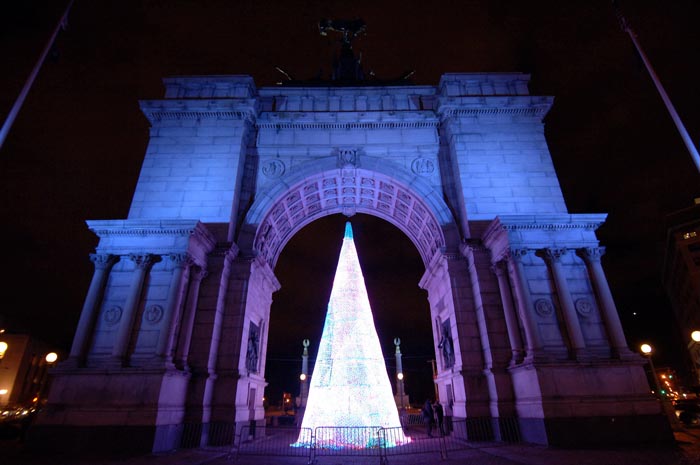
  • New Years Eve in Brooklyn's Grand Army Plaza

Celebrate New Year's Eve in in Brooklyn. This New Year's Eve celebration features fireworks and the countdown to the New Year at Grand Army Plaza.


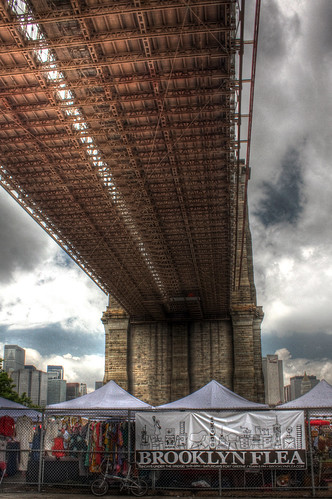
  • Brooklyn Bridge Walk into the New Year

Register at 10:30, walk begins at 11 PM. See New Year's Eve fireworks from Staten Island, Brooklyn, Central Park, NJ and the Empire State Building light show. Learn how the Brooklyn Bridge was built. Meeting Place: Outside Blimpie's Restaurant at 38 Park Row between Spruce and Beekman Streets across from City Hall Park. $35 if reserved in advance, $40 cash the day of.


  • Jivamukti Yoga Center's 18th Annual New Year's Eve Mauna

Mauna is the yogic practice of being silent. As the clock strikes at midnight, Sharon Gannon will break the silence and welcome the New Year with chants of "lokah samasta sukhino bhavantu" (May all beings everywhere by happy and free"). David Life will give an inspirational talk and Uma Saraswati will lead Kirtan. Vegan chai and snacks will be served throughout the evening. 9 pm - 1 am. (Free)

Tuesday, May 5, 2009

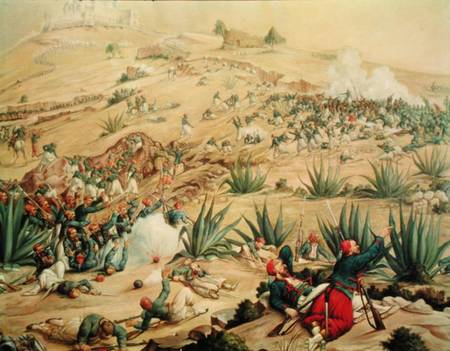
The Battle of Pueblo


  • Cinco de Mayo: The Battle of Pueblo...

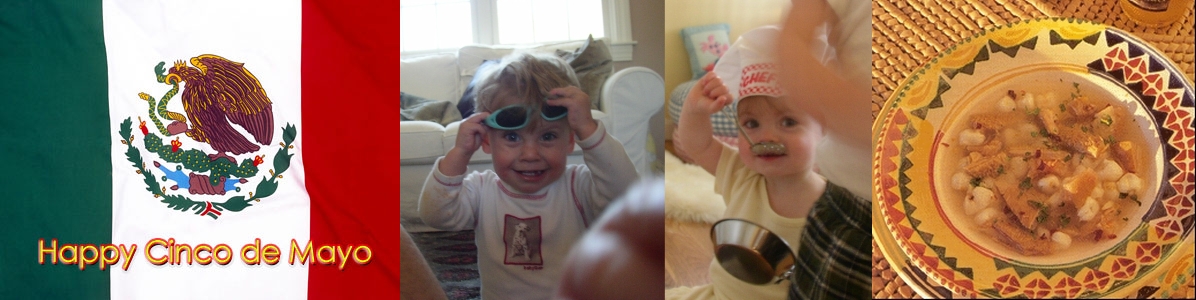
Happy Cinco de Mayo to you! If you celebrate this Mexican holiday, I hope you have time to enjoy a margarita or two.

Cinco de Mayo remembers the Mexican victory over France on May 5th, 1862 at the Battle of Pueblo. Napoleon III of France landed French forces on Mexican soil late in 1861 on the pretext of debt collection. In reality, he intended to conquer Mexico. In the spring of 1862, the French army moved on Mexico City.

President Juárez of Mexico ordered that the French be intercepted at Pueblo. Wikipedia notes what happened next, "The weather favored the Mexicans. Rainy season downpours had turned the ground to mud, slowing the movement of the French artillery. Contemptuous of the Mexican troops, General Lorencez assumed they would flee from heavy fighting. At noon, he directed his first charge at the Mexican center. The Mexicans held their ground and drove the French back. The French regrouped and launched two more charges, both defeated. The Mexicans counter-attacked. A force of Zacapoaxtla and Xochiapulco Indians, many armed only with machetes, overran part of the French lines. Porfirio Díaz (a future President of Mexico) led a well disciplined company of Mexican cavalry that flanked the French. The battle was over by 4:30 p.m."

The victory was astonishing. The French army was modern and well trained. In contrast, the Mexican forces consisted largely of untrained farmers with primitive weapons. Everyone, including the Mexicans, had trouble believing the result!

The French would regroup and eventually take Mexico City. The Emperor Maximilian ruled portions of Mexico on behalf of France until he was executed in 1867. However, the heroism of the Mexicans at Pueblo showed the French and the world that they were willing to defend their country. The Mexicans had no intention of losing badly as they had in the Mexican-American War a mere 15 years earlier.

Looking back from the early 21st century, it is easy to see why Cinco de Mayo has been remembered by Mexicans for generations.

Monday, May 4, 2009

Cinco De Mayo


  • Introduction
The holiday of Cinco De Mayo, The 5th Of May, commemorates the victory of the Mexican militia over the French army at The Battle Of Puebla in 1862. It is primarily a regional holiday celebrated in the Mexican state capital city of Puebla and throughout the state of Puebla, with some limited recognition in other parts of Mexico, and especially in U.S. cities with a significant Mexican population. It is not, as many people think, Mexico's Independence Day, which is actually September 16.

  • Setting The Stage
The battle at Puebla in 1862 happened at a violent and chaotic time in Mexico's history. Mexico had finally gained independence from Spain in 1821 after a difficult and bloody struggle, and a number of internal political takeovers and wars, including the Mexican-American War (1846-1848) and the Mexican Civil War of 1858, had ruined the national economy.

  • Archduke Ferdinand Maximilian
During this period of struggle Mexico had accumulated heavy debts to several nations, including Spain, England and France, who were demanding repayment. Similar debt to the U.S. was previously settled after the Mexican-American War. France was eager to expand its empire at that time, and used the debt issue to move forward with goals of establishing its own leadership in Mexico. Realizing France's intent of empire expansion, Spain and England withdrew their support. When Mexico finally stopped making any loan payments, France took action on its own to install Napoleon III's relative, Archduke Maximilian of Austria, as ruler of Mexico.
  • Mexico Confronts The Invasion
France invaded at the gulf coast of Mexico along the state of Veracruz (see map) and began to march toward Mexico City, a distance today of less than 600 miles. Although American President Abraham Lincoln was sympathetic to Mexico's cause, and for which he is honored in Mexico, the U.S. was involved in its own Civil War at the time and was unable to provide any direct assistance.

  • Gen. Zaragoza
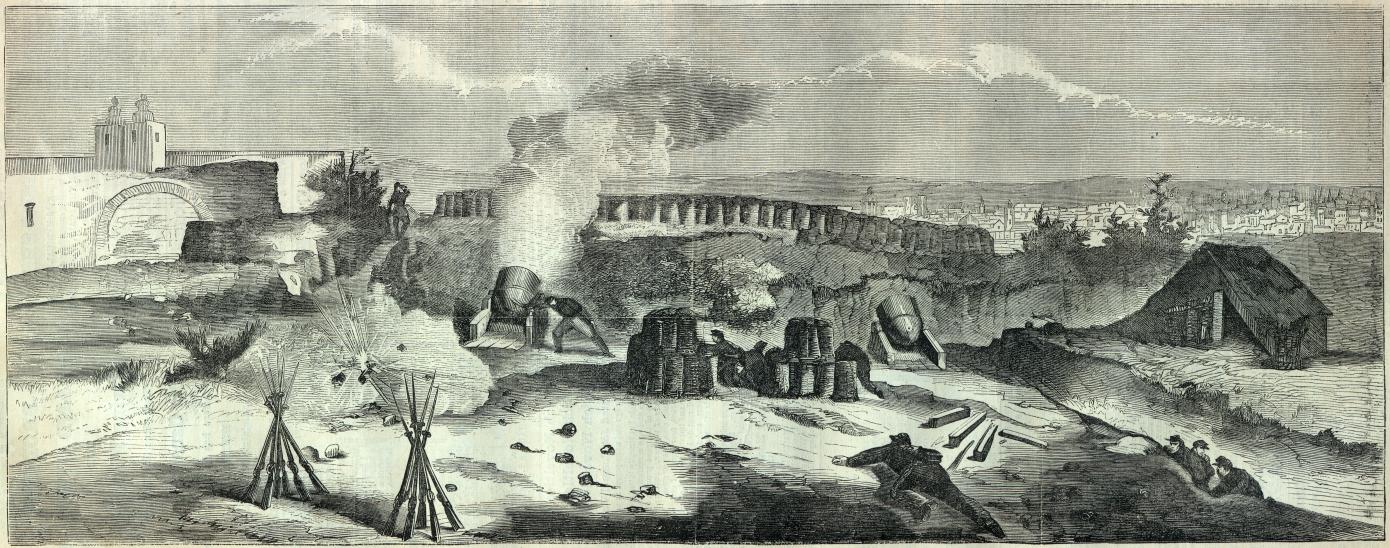
Marching on toward Mexico City, the French army encountered strong resistance near Puebla at the Mexican forts of Loreto and Guadalupe. Lead by Mexican General Ignacio Zaragoza Seguin, a smaller, poorly armed militia estimated at 4,500 men were able to stop and defeat a well outfitted French army of 6,500 soldiers, which stopped the invasion of the country. The victory was a glorious moment for Mexican patriots, which at the time helped to develop a needed sense of national unity, and is the cause for the historical date's celebration.

Unfortunately, the victory was short lived. Upon hearing the bad news, Napoleon III had found an excuse to send more troops overseas to try and invade Mexico again, even against the wishes of the French populace. 30,000 more troops and a full year later, the French were eventually able to depose the Mexican army, take over Mexico City and install Maximilian as the ruler of Mexico.

Maximilian's rule of Mexico was also short lived, from 1864 to 1867. With the American Civil War now over, the U.S. began to provide more political and military assistance to Mexico to expel the French, after which Maximilian was executed by the Mexicans - his bullet riddled shirt is kept at the museum at Chapultepec Castle in Mexico City. So despite the eventual French invasion of Mexico City, Cinco de Mayo honors the bravery and victory of General Zaragoza's smaller, outnumbered militia at the Battle of Puebla in 1862.

  • Today's Celebration
For the most part, the holiday of Cinco de Mayo is more of a regional holiday in Mexico, celebrated most vigorously in the state of Puebla. There is some limited recognition of the holiday throughout the country with different levels of enthusiasm, but it's nothing like that found in Puebla.

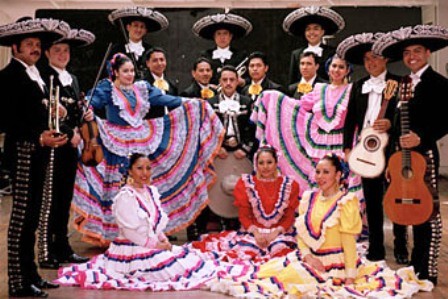
Celebrating Cinco de Mayo has become increasingly popular along the U.S.-Mexico border and in parts of the U.S. that have a high population of people with a Mexican heritage. In these areas the holiday is a celebration of Mexican culture, of food, music, beverage and customs unique to Mexico.

Commercial interests in the United States and Mexico have also had a hand in promoting the holiday, with products and services focused on Mexican food, beverages and festivities, with music playing a more visible role as well. Several cities throughout the U.S. hold parades and concerts during the week following up to May 5th, so that Cinco de Mayo has become a bigger holiday north of the border than it is to the south, and being adopted into the holiday calendar of more and more people every year.
Wednesday, May 28, 2008

Ibiza Fiestas

3 Kings Parade - 5th January


After the excesses of Christmas & New Years Eve the childrens turn comes on the evening of the 3 Kings Day Fiesta on the 6th January with parades, fireworks and the distribution of presents and thousands of sweets to the children of Ibiza.
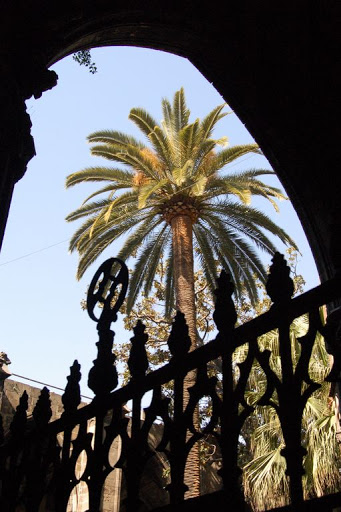
On the 5th the three kings (Melchor, Gasper and Baltasar) arrive in many of the towns and villages throughout Ibiza. Some arrive by boat, some on horseback, but they parade throught the streets throwing sweets out and then afterwards giving away presents.


Carnival - 1st March


Ibiza folk love fiestas - and the more the merrier. In fact they seize upon every opportunity to break out the traditional costumes and display their folk dancing talents in a display of religious fervour.
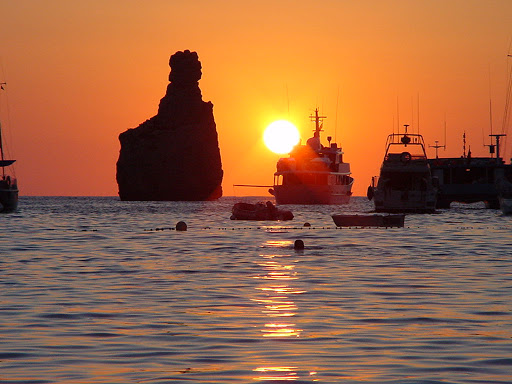
Carnival, however, is a completely different ball game incorporating none of the above elements. It is simply an excuse for the population to celebrate the end of winter with pure enjoyment, flamboyance and fun.
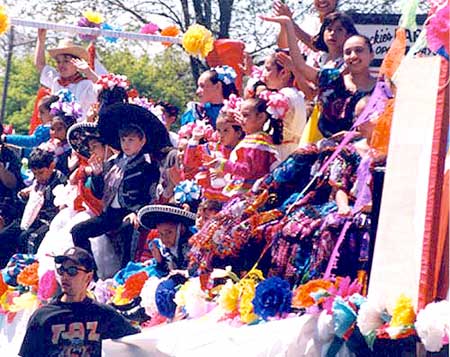
Endless pageants of glittering costumes, brilliantly decorated carriages, loud music and laughing faces are the order of the day as both adults and children display the fruits of their labours over the previous weeks - building floats, sewing costumes and practicing dance routines.
The results of all this toil are then released onto the streets in a chaotic and diverse display that often reflects the preoccupations of the islanders. Satirical digs at political characters and events are to be expected - this year's favourite was the topical 'motorway' building project currently being opposed by the majority of the population. However, all of this takes place in an atmosphere of joy and infectious exuberance that extends to the spectators, who also dress up, celebrate and dance - everyone with everybody regardless of nationality, language, colour or creed.
Laughter knows no boundaries.

Santa Eulalia - 1st Sunday in May


The first Sunday in May may seem a fairly loose date for a fiesta, in terms of dates and diaries, but this is perhaps a clue as to how far back into antiquity this fiesta dates. It is not only one of the oldest, but also one of the quaintest of the island celebrations. One of the highlights is the procession featuring beautifully preserved and with flowers decorated horse drawn carts. That's where the name Flower Festival comes from.
Nobody knows how old the tradition is, but it certainly pre-dates the town's current fortress church. Tradition has it that originally there was a small chapel atop the cliff to the north side of the bay of Santa Eulalia , which was perfectly adequate for the settlements smaller population of the day. However, one Sunday (very likely the first Sunday in May) almost immediately after the service and the departure of the worshippers, there was a loud rumble and the little church slid down the face of the cliff and into the sea. As nobody was hurt the incident was proclaimed a miracle by the hugely religious population and word of this miracle spread swiftly around the island. This prompted people from all over the island to travel to tiny Santa Eulalia each first Sunday in May to celebrate the miraculous salvation of the local worshippers and the holy place.
Bear in mind that the vast majority of the island's population travelled by horse and cart until only a few decades ago which largely accounts for the negative attitude of locals to travelling great distances, of more than a few miles, even today. Long-term residents soon seem to absorb this attitude too. Then consider that there weren't any roads to speak of - even today's roughest camino would look like a motorway to our ancient horse and cart.
But they made the effort to trek over to this fiesta on their carts and thus this Santa Eulalia celebration became the island's annual cart exhibition.
Cart processions can actually be more entertaining than one might expect. This year marks the tenth anniversary of the 'día del trueno' meaning the 'day of thunder'. It has long been a tradition to crown a fiesta with a spectacular firework display long after the sun has set - and they are indeed spectacular. However, as any proficient pyrotechnist will tell you, it is vital to test one firework from the installation long before unleashing the barrage that marks the end of the fiesta. Unfortunately on this occasion, probably due to a wiring fault (in the best of local tradition) the afternoon test firing unleashed the entire display as the horse and cart procession made its way down the main street. The noise somewhat alarmed the horses who took off in complete panic with carts and occupants in tow. Unfortunately the full effects of the firework display were invisible on such a sunny afternoon.
This misfortune was only to be bettered the following year when the town hall decided that distributing the traditional sweets from a low flying aircraft would be a novel idea. Once again fifty or more horses fled up the side streets of the village in terror.
To end on a more positive note - tradition has it that the submerged bell of the sunken church still tolls on dark and stormy nights to warn passing ships of the shallow waters near to the cliff. In recent memory this seems to have worked? Anyway, let's look forward to an eventful day out with the rest of the island - see you on the first Sunday of May.


San Juan - 24th June


One of the most loved Fiestas - this falls on June 24th, coinciding almost exactly with the summer solstice - suggesting that this festival has been around some time.
Although a Catholic holiday, it falls into the category of 'existing pagan festival' renamed as Christian 'holy-day'. This one dates back to times when churches were caves and altars were trees. But when the sun reached its summer solstice zenith everybody felt good. The trees were full of fruit, the crops were in the fields, the sea was calm for fishing and the weather was warm. People were content - much as they still are nowadays in June, as the night club opening parties compete for attention.
The main feature of this Fiesta is still the huge nocturnal bonfires the locals light to express their gratitude for being alive, and these are spectacular even nowadays. In days gone by, when light at night was practically a non-occurence, it is easy to see how these came to assume wizardly proportions in island mentality. To some extent this could explain the very 'other worldly' vibe of the village of San Juan and those who choose to live there?
The symbolic significance of the fires is that of release and renewal. All present throw something old into the fire in order to make room for the new. Different items represent different mystical messages e.g. old shoes mean that the thrower wants to walk a new path of life? Despite all of the serious magical associations, this is still a fun Fiesta if you can find a parking spot or don't mind a long walk?


El Carmen - 16th July

The Virgin of Carmen is the patron saint and protector of fishermen and sailors - those who live on and from the sea. Little surprise then that her 'saints' day is celebrated vigorously throughout Ibiza and Formentera, where the sea is almost inevitably your distant horizon.
Most churches on the island contain a statue of 'Nuestra Se-ora de Carmen' as local worshippers have great faith in her benevolent aura, which is apparently most powerfully felt at the tiny hamlet of Es Cubells on the south coast.
However, this cult only arrived on Ibiza 150 years ago with a Carmelite friar exiled by the government of the day, who were none to keen on the clergy, or their influence over the population. The friar, Father Palau, was one of Barcelona's leading intellectuals and therefore a major dissident problem for the far-left progressive government. Ibiza seemed the perfect, inaccessible backwater for their problem.
(In fact Father Palau was only here for six years before he was absolved of any political wrongdoing and returned to Barcelona.)
Nonetheless he left an indelible mark on the island during his extended sabbatical. Clearly not seeking company he chose the tiny hamlet of Es Cubells to set up home, which at that time consisted of two houses and a few farmers' outbuildings.
In the absence of intellectual stimulation he retreated within himself and made nature his family. This passion regularly drew him to the uninhabited. mystical island of Es Vedra where he would meditate and fast for as long as a month at a time. Surrounded and inspired by nature and nothing else he chronicled his experiences and found sufficient inner peace to return to society and build a small hermitage overlooking the sea. This was dedicated to his beloved Virgin of Carmen and, despite the risk, he arranged for his old icon of the virgin to be smuggled out to the island for the altar of his shrine.
He then set about touring Ibiza and Formentera preaching her virtues in every house of God. His sermons generated such fervour that an icon of El Carmen appeared at almost every church on the Pitiusas.
However, hordes of worshippers still chose to brave the long, rocky road to Father Palau's little hermitage at Es Cubells to best worship the Virgin, or thank her for her benevolence. This they felt was where her power was strongest, in much the same way that many people feel about nearby Es Vedra.
Nowadays the current church of Es Cubells, with its magnificent view and undeniable ambience, stands on the spot originally occupied by Father Palau's original hermitage.


Formentera - 25th July


July 25th is the Fiesta de Santiago, a national holiday throughout Spain, which has its roots way back in highly religous legend. However, in Formentera it is known as the Fiesta Sant Jaume (St. James' day) and has its roots in much more recent history. Unusually these roots have no religious connotations and pay little homage to the 'saint behind the day'. This is how it came about:-
For many centuries, since Formentera was abandoned in the 14th century during the Black Death, pirates ruled the waves around the Pitiusan islands (Ibiza & Formentera) and made Formentera too risky a place to live. Even after the Ibicenco corsairs had more or less beaten off the pirates, they were still not entirely eradicated which meant that travelling to and from Formentera was not the pleasant afternoon out that we enjoy today - it was a life and death venture.
However, during the 18th century families slowly trickled back to stake their claims on the little island and by the middle of the century there were some 200 people living there. As it happens many of those brave souls came from the Santa Eulalia area of Ibiza where, for some reason, there was an inordinately high concentration of men called Jaume (James?). For this reason many of Formentera's new settlers were called Jaume - some had Jaume for a surname too.
Late July was a relatively quiet time in the agricultural calendar and is even today. The fruit has already been harvested and the wheat has still to ripen. In addition to this the summer sea is at its calmest and most inviting for a boat trip. There was only one thing for a self respecting, sensible Ibicenco to do given this fortuitous situation - jump in a boat and pay a visit to the friends and family in Formentera? The perfect day usually selected for this visit was, of course, San Jaume and before long the spontaneous visits coalesced into an official holiday.
What a good reason for a fiesta? the re-uniting of long lost loved ones..... (church optional)

Twitter Delicious Facebook Digg Stumbleupon Favorites More

 
Design by Free WordPress Themes | Bloggerized by Lasantha - Premium Blogger Themes | GreenGeeks Review