Thursday, November 27, 2008

Lisbon


The capital of Portugal sits at the point where the River Tagus feeds into the Atlantic, just about as far west as you can go without getting your feet wet. Being built on seven hills, it has plenty of vantage points from which to contemplate the distant horizons that called the Portuguese explorers in the country’s golden age during the 16th century, when it was the hub of commerce with the far east and gold poured into Lisbon’s coffers from the new west. Devastating earthquakes and loss of empire left the city a little threadbare, but 21st-century commerce took a hand, sprucing the place up for Euro 2004. Portugal may have been the runners-up, but Lisbon emerged a winner.

The grid-like Baixa, or downtown, was laid out after the devastating 1755 earthquake, and is a candidate for being a UNESCO World Heritage Site. It is flanked by two squares: the riverside Praça do Comércio, framed by arcades and dominated by a triumphal arch and, at the northern end, Praça Dom Perdo IV (Rossio). The Elevador de Santa Justa, an outdoor cast-iron lift that first opened in 1901, offers a panoramic view of the streets in between.

The Alfama district east of Baixa, where black-clad widows potter in tiny squares, retains the layout and atmosphere of Moorish times. The Romanesque cathedral, or Sé , was founded on the site of a mosque, after the 1147 Christian Reconquest. Further uphill there are fine views from the Castelo de São Jorge. The castle was built by the Moors on the site of a Roman fort, but what you see today is almost all 20th-century mock-up. West of Baixa, the shops and cafés of Chiado district give way to the more raffish Bairro Alto, a nightlife haven.

The city’s main axis is Avenida da Liberdade. Lined with cafés and fashion chains, it leads from Rossio to the formal Parque Eduardo VII. Beyond that is the Museu Calouste Gulbenkian , with fine Western and Oriental art.

Tourists also flock to Belém, a half-hour tram ride west. The 15th-century explorers sailed from here into what was then still very much the unknown, as the Monument to the Discoveries reminds you. The Tower of Belém and Jerónimos monastery showcase the exuberant Manueline (late Gothic) style of the time. Nearby, the delicious custard tarts at Antiga Confeitaria are almost as big a draw for visitors.

Lisbon’s eastern waterfront was of little touristic interest until 1998. Staged on reclaimed industrial wasteland, Expo 98 gave Lisbon its biggest facelift in two centuries and a slew of new attractions. Now renamed Parque das Nações , the site has an Oceanarium ; the Pavilhão do Conhecimento , with science exhibits; and – the district’s architectural highlight – Alvaro Siza Vieira’s Portugal pavilion, with its remarkable concrete canopy.

REGIONAL GASTRONOMY

This region is a fish heaven where you can find fresh bass and cockle, and the mussels from Ericeira and Cabo do Roca; the red mullets, clams and oysters from Setúbal; the swordfish from Sesimbra and the crustaceans from Cascais.
Other specialities typical of this area include the goat and sheep cheeses from Sobral de Monte Agraço and from Azeitão, the pastries from Malveira and the "pão de ló" from Loures, the nuts and egg dainties from Cascais, the "zimbros" (gin cakes) from Sesimbra, the "queijadas" (little cheese cakes) from
Sintra; the wines from Colares, Bucelas, Setúbal, Carcavelos and the famous "muscatel" wine from Setúbal. In Lisbon itself, you can try all the specialities of Portuguese cuisine. In this city, you will mainly find typical country dishes like grilled sardines, clams "à Bulhão Pato" style, fish soups "à fragateira" style ... and varied and tasty dishes cooked with codfish. Apart from all the desserts available to you, do not forget to try the local Belém custard pies.

Wednesday, November 26, 2008

Laos

Laos has a rich history stretching back 10,000 years. At its height, it ruled over present day Laos and much of neighbouring northern Thailand. Landlocked and laid-back, it’s a unique spin on the Southeast Asia experience.
Here Buddhism permeates every facet of life, change comes slowly, and cities bed down early. The perfect place to break from office politics or put a pause in a hyperactive travel agenda, this land of mountain, mists and untamed natural beauty tempts with unrivalled peace and serenity.
Open your heart, open your mind, and let the genuine faith and generous hospitality of Laos replenish your soul.

The mighty Mekong in the west and the Annamite Mountains in the east offer natural borders with Thailand and Vietnam respectively, while Laos also shares borders with China in the north, Myanmar in the northwest and Cambodia in the south.
With over half of this landlocked country's 236,800sqkm densely forested, and 70% of it mountainous, it is hardly surprising that a profusion of rare flora and over 1,200 species of wildlife find a home beneath its tropical canopy.

One of the lowest population densities in Asia, at 19 persons per square km, and an estimated population of only 5.4 million people, belies the fact that Laos is home to 68 different ethnic groups. These fall into three groupings, based upon language, culture and traditions.
The fertile Mekong River valley and lowland plains are where 68% of the total population live and this group is classified as the Lao Loam.


-Luang Prabang

The ancient capital of the Lam Xang Kingdom wakes up every day to the sound of bells gongs and drums from the local temples.

-Vientiane

The tranquil capital of Laos is beginning to expand, but its city streets are still dominated by quiet temples and slow rhythm of everyday life.

-Champasak

Tropical river islands and the World Heritage Site of Vat Phou lie in Laos southern regions. Part of the rich geographical tapestry of the country.

-Xien Khouang (Plain of Jars)

In the north of Laos, lying across a flat high plateau is the province of Xieng-Khouang, where you will find the intriguing Plain of Jars.

-Bokeo

Located along the Mekong river, in the heart of golden Triangle opposite Chiang Rai province in Thailand and sharing the border with Myanmar, "Bokeo" means the Land of Sapphires.

Sunday, November 23, 2008

Eiffel Tower

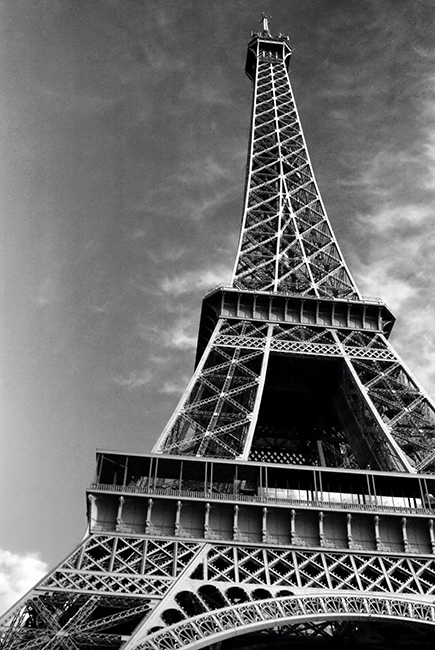
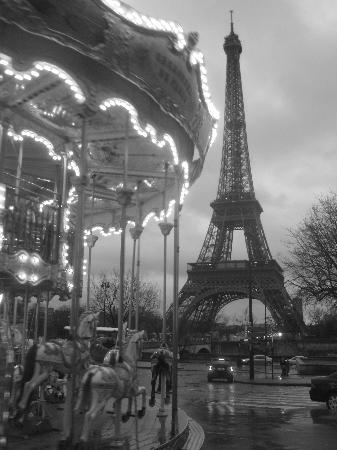
The Eiffel Tower (French: Tour Eiffel) is an iron tower built on the Champ de Mars beside the Seine River in Paris. The tower has become a global icon of France and is one of the most recognizable structures in the world.

Named after its designer, engineer Gustave Eiffel, the Eiffel Tower is the tallest building in Paris. More than 200,000,000 have visited the tower since its construction in 1889, including 6,719,200 in 2006, making it the most visited paid monument in the world. Including the 24 m (79 ft) antenna, the structure is 325 m (1,063 ft) high (since 2000), which is equivalent to about 81 levels in a conventional building.

When the tower was completed in 1889 it was the world's tallest tower — a title it retained until 1930 when New York City's Chrysler Building (319 m — 1,047 ft tall) was completed. The tower is now the fifth-tallest structure in France and the tallest structure in Paris, with the second-tallest being the Tour Montparnasse (210 m — 689 ft), although that will soon be surpassed by Tour AXA (225.11 m — 738.36 ft).

The metal structure of the Eiffel Tower weighs 7,300 tonnes while the entire structure including non-metal components is approximately 10,000 tonnes. Depending on the ambient temperature, the top of the tower may shift away from the sun by up to 18 cm (7 in) because of thermal expansion of the metal on the side facing the sun. The tower also sways 6–7 cm (2–3 in) in the wind.As demonstration of the economy of design, if the 7300 tonnes of the metal structure were melted down it would fill the 125 meter square base to a depth of only 6 cm (2.36 in), assuming a density of the metal to be 7.8 tonnes per cubic meter. The tower has a mass less than the mass of the air contained in a cylinder of the same dimensions,[7] that is 324 meters high and 88.3 meters in radius. The weight of the tower is 10,100 tonnes compared to 10,265 tonnes of air.

The first and second levels are accessible by stairways and lifts. A ticket booth at the south tower base sells tickets to access the stairs which begin at that location. At the first platform the stairs continue up from the east tower and the third level summit is only accessible by lift. From the first or second platform the stairs are open for anyone to ascend or descend regardless of whether they have purchased a lift ticket or stair ticket. The actual count of stairs includes 9 steps to the ticket booth at the base, 328 steps to the first level, 340 steps to the second level and 18 steps to the lift platform on the second level. When exiting the lift at the third level there are 15 more steps to ascend to the upper observation platform. The step count is printed periodically on the side of the stairs to give an indication of progress of ascent. The majority of the ascent allows for an unhindered view of the area directly beneath and around the tower although some short stretches of the stairway are enclosed.

Maintenance of the tower includes applying 50 to 60 tonnes of paint every seven years to protect it from rust. In order to maintain a uniform appearance to an observer on the ground, three separate colors of paint are used on the tower, with the darkest on the bottom and the lightest at the top. On occasion the colour of the paint is changed; the tower is currently painted a shade of brownish-grey. On the first floor there are interactive consoles hosting a poll for the colour to use for a future session of painting. The co-architects of the Eiffel Tower are Emile Nouguier, Maurice Koechlin and Stephen Sauvestre.

Thursday, October 30, 2008

Sightseeing and interesting attractions around Puerto Rico


If you are looking for attractions and places to visit in Puerto Rico, then read on and I will present you some of the most interesting places to see on the island.
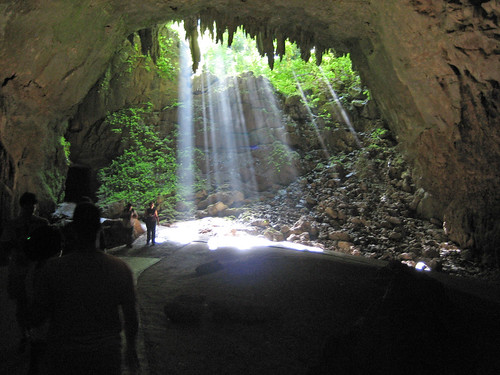
The island of Puerto Rico was blessed with many natural attractions and great spots for sightseeing. We invite you to go beyond the shore and explore it all. When you visit Puerto Rico you will find that in order for you to see all the attractions there are it will literally take you months to explore and visit them all. Whatever you are looking for in a vacation Puerto Rico has it; romance, adventure, relaxation, history, beauty, magical places and friendly locals that will make you feel right at home.
Puerto Rico is the favorite destination on the Caribbean simply because it is the most diverse island with a range of attractions and sightseeing spots in every corner of the island. Many places to visit on the coast, and the central hillside of the island. No other Caribbean island has such a variety of attractions and places to visit like Puerto Rico.
You won't run out of things to do while you visit the island of Puerto Rico; the star of the Caribbean. There are attractions and places to visit for every type of traveler. From adventurous places, to the most alluring and relaxing spots that are free of crowds. Puerto Rico is very family friendly, attractions where time seems to stand still so you can build memories to last a lifetime.
Let's go to some of the my favorite places to visit and attractions in Puerto Rico. Puerto Rico may seem small on a map, and it is when compared to many other destinations. But you will find that you will be wishing you had more time to explore the island of Puerto Rico. There are too many places to see, too many attractions and beautiful beaches to explore in a week or two. So get ready to have fun, and be ready to start blocking some time in your calendar for your next vacation to Puerto Rico. I guarantee you that once you visit this beautiful land of Puerto Rico, you will want to come again and again, and like many you may even find yourself looking for real estate so you can have a place to come and stay with friends, family and possibly retire.
If you really want to get to know Puerto Rico, transportation is a must. Get a rental car because the best of Puerto Rico is off the beaten path. Let's explore the island in more detail.
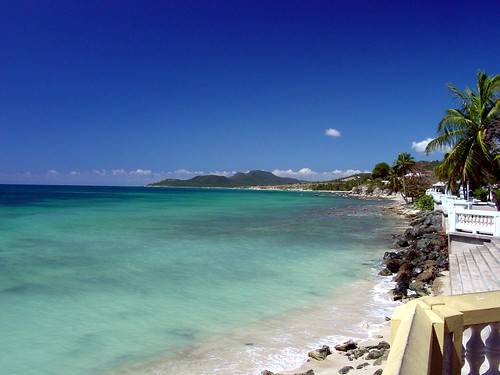
Drive off to Porta del Sol (west Puerto Rico) and you will find pristine, un-crowded beaches with breathtaking sunsets. If you enjoy surfing visit the town of Rincòn, where you will experience the best surfing on the island.
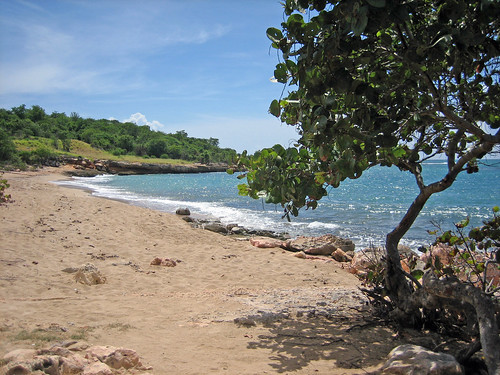
Don't leave Puerto Rico without going to the town ofCabo Rojo where you will find some of the best seafood restaurants in Puerto Rico at very affordable prices. In Cabo Rojo, you will also find some of the most scenic un-crowded beaches and the beautiful lighthouse where you can enjoy stunning vistas, and the best sunsets in Puerto Rico. Visit La Parguera in the town of Lajas where you can experience the natural wonder of bioluminescence.
Explore the Dry Forest of Guanica, where you will find the greatest population of birds on the island and more great beaches.
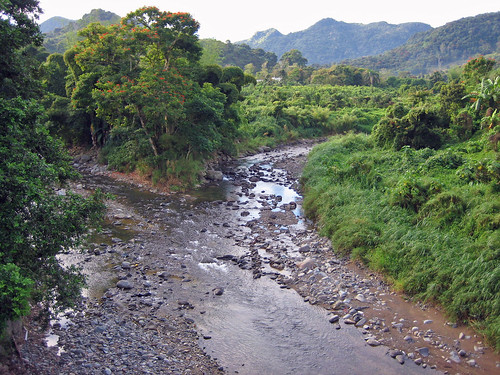
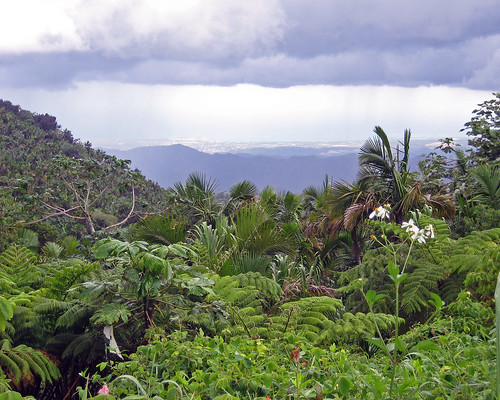
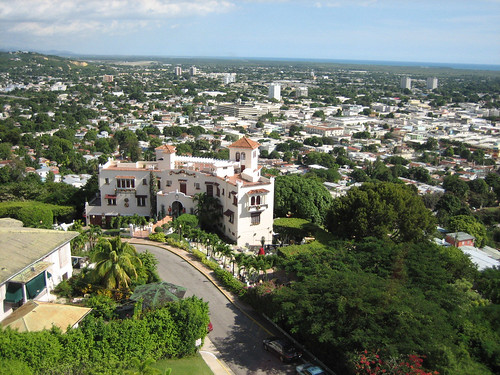
Visit the historic town of San German, where you will drive through narrow brick roads lined with old-world style Spanish homes. San German also houses the first church that was ever built in the New World. Take the scenic drive, and you will be mesmerized by the majestic mountains running through the center of the island and the breathtaking turquoise waters framed by lush, tall, green palm trees.
Another great destination in Puerto Rico is the island of Vieques, the new capital of weddings and honeymoons of Puerto Rico, where you will find pristine, virgin, and secluded beaches. Vieques will be the cherry on your perfect Puerto Rico vacation.
Before you leave Puerto Rico please take at least a couple of days to visit this beautiful island, it is like going back 60 years and seeing the Caribbean the way it was intended to be.
There is so much to see in Puerto Rico, you could spend years of your life exploring the beauty and diversity of the island.

Puerto Rican natives are very friendly and they will make you feel welcomed. Puerto Rico has the charm of an island and the conveniences and roads that you would find in the United States. It is very easy to get around the island. If you get lost, the helpful residents will be happy to lead you in the right direction. Helpful hint: Be ready to use landmarks as directions instead of road names.

Ready to get on the road and begin exploring? Start smiling you are on your way to Puerto Rico.

Puerto Rico


A bustling island whose shiny consumerism rubs up against an unspoiled interior.


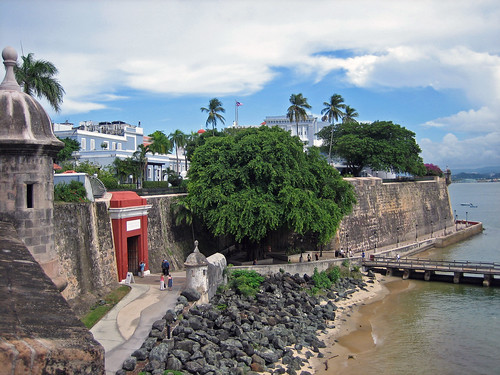
Puerto Rico is where four centuries of Spanish Caribbean culture comes face to face with the American convenience store. This leads to some strange juxtapositions - parking lots and plazas, freeways and fountains, skyscrapers and shanties - but it's all apiece with the Caribbean's hybrid history.

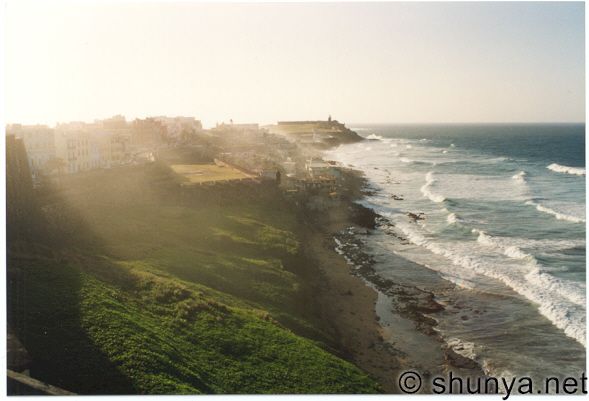
Travellers who venture into the island's mountainous interior or explore its undeveloped coasts come across stately hill towns where the locals in the plaza seem to have been feeding the same pigeons for decades, and reefs where divers can see 30 species of fish in as many seconds.


Puerto Rico is a Caribbean Vacation Spot worth visiting, because it has such huge variety. As well as being able to take a top class luxury vacation in Puerto Rico. There will be the perfect Puerto Rico vacation spot for you, whether it is a Puerto Rico beach vacation or you want to go hiking in a forest, or eating top class Caribbean cuisine. You will be able to take romantic walks on beautiful beaches. Whatever you want to do you can probably do it in Puerto Rico.


Puerto Rico is easily accessible by air from North, South, and Central America so it is an excellent choice for a business reward trip, a wedding, a honeymoon or a business conference, never mind a straightforward luxury vacation.


It is just over three hours from Washington DC, over five hours from Mexico City, and twelve hours from London.
Puerto Rico has things to do and see which will please just about everybody.........

Monday, June 23, 2008

History of Mauritius


After a brief Dutch settlement, French immigrants who came in 1715 named the island ÃŽle de France and established the first road and harbor infrastructure, as well as the sugar industry, under the leadership of Gov. Mahe de Labourdonnais. Blacks from Africa and Madagascar came as slaves to work in the sugarcane fields. In 1810, the British captured the island and in 1814, by the Treaty of Paris, it was ceded to Great Britain along with its dependencies.

Indian immigration, which followed the abolition of slavery in 1835, rapidly changed the fabric of Mauritian society, and the country flourished with the increased cultivation of sugarcane. The opening of the Suez Canal in 1869 heralded the decline of Mauritius as a port of call for ships rounding the southern tip of Africa, bound for South and East Asia. The economic instability of the price of sugar, the main crop, in the first half of the 20th century brought civil unrest, then economic, administrative, and political reforms. Mauritius became independent on March 12, 1968.

The effects of Cyclone Claudette in 1979 and of falling world sugar prices in the early 1980s led the government to initiate a vigorous program of agricultural diversification and develop the processing of imported goods for the export market. The country formally broke ties with the British Crown in March 1992, becoming a republic within the Commonwealth.

In addition to sugarcane, textile production and tourism are the leading industries. Primary education is free, and Mauritius boasts one of the highest literacy rates in sub-Saharan Africa.
With a complicated ethnic mix—about 30% of the population is of African descent and the remainder is mostly of Indian descent, both Hindu and Muslim—political allegiances are organized according to class and ethnicity.

In Feb. 2002, Mauritius went through four presidents in succession. Two resigned within days of each other, each after refusing to sign a controversial anti-terrorism law that severely curtailed the rights of suspects. The law, supported by the prime minister, was ultimately signed by a third, interim president. At the end of February, a fourth president, Karl Offman, was elected by parliament.

In Oct. 2003, Paul Berenger, a white Mauritian of French ancestry, became the first non-Hindu prime minister in the history of Mauritius. Berenger and the previous prime minister, Anerood Jugnauth, formed a coalition during Sept. 2000 elections. Under their agreement, Jugnauth served as prime minister for three years and Berenger assumed the prime ministership for the remaining two years of the term. Jugnauth then became president in 2003, and in July 2005, Navin Ramgoolam, prime minister from 1995 to 2000, again assumed that office.

Thursday, June 19, 2008

Republic of Mauritius


President: Anerood Jugnauth (2003)

Prime Minister: Navin Ramgoolam (2005)

Land area: 714 sq mi (1,849 sq km);
total area: 788 sq mi (2,040 sq km)

Population (2007 est.): 1,250,882 (growth rate: 0.8%); birth rate: 15.3/1000; infant mortality rate: 14.1/1000; life expectancy: 72.9; density per sq mi: 1,752

Capital and largest city (2003 est.): Port Louis, 577,200 (metro. area), 143,800 (city proper)

Monetary unit: Mauritian rupee

Languages: English less than 1% (official), Creole 81%, Bojpoori 12%, French 3% (2000)

Ethnicity/race: Indo-Mauritian 68%, Creole 27%, Sino-Mauritian 3%, Franco-Mauritian 2%

Religions: Hindu 48%, Roman Catholic 24%, other Christian 8%, Islam 17% (2000)

Literacy rate: 86% (2003 est.)

Economic summary: GDP/PPP (2007 est.): $14.9 billion; per capita $ $11,900 . Real growth rate: 5.6%. Inflation: 8.8%. Unemployment: 8.8%. Arable land: 49%. Agriculture: sugarcane, tea, corn, potatoes, bananas, pulses; cattle, goats; fish. Labor force: 552,700; construction and industry 30%, services 25%, agriculture and fishing 9%, trade, restaurants, hotels 22%, transportation and communication 7%, finance 6% (2007). Industries: food processing (largely sugar milling), textiles, clothing, chemicals, metal products, transport equipment, nonelectrical machinery, tourism. Natural resources: arable land, fish. Exports: $2.475 billion f.o.b. (2007 est.): clothing and textiles, sugar, cut flowers, molasses. Imports: $3.627 billion f.o.b. (2007 est.): manufactured goods, capital equipment, foodstuffs, petroleum products, chemicals. Major trading partners: UK, UAE, France, U.S., Madagascar, South Africa, China, India (2006).
Member of Commonwealth of Nations

Communications: Telephones: main lines in use: 357,300 (2006); mobile cellular: 772,400 (2006). Radio broadcast stations: AM 4, FM 9, shortwave 0 (2002). Radios: 420,000 (1997). Television broadcast stations: 2 (plus several repeaters) (1997). Televisions: 258,000 (1997). Internet Service Providers (ISPs): 9,792 (2007). Internet users: 182,000 (2006).

Transportation: Railways: 0 km. Highways: total: 2,020 km; paved: 2,020 km (including 75 km of expressways) (2005). Ports and harbors: Port Louis. Airports: 5 (2007).

International disputes: Mauritius claims the Chagos Archipelago (UK-administered British Indian Ocean Territory), and its former inhabitants, who reside chiefly in Mauritius, but were granted UK citizenship and the right to repatriation in 2001; claims French-administered Tromelin Island.

text taken from infoplease

Saturday, June 14, 2008

Atomium - Brussels


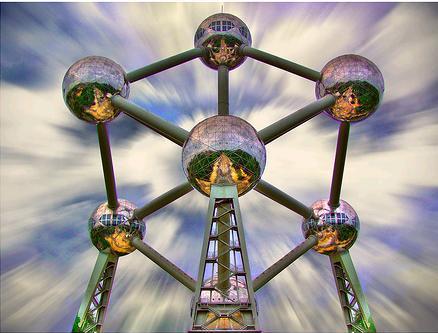
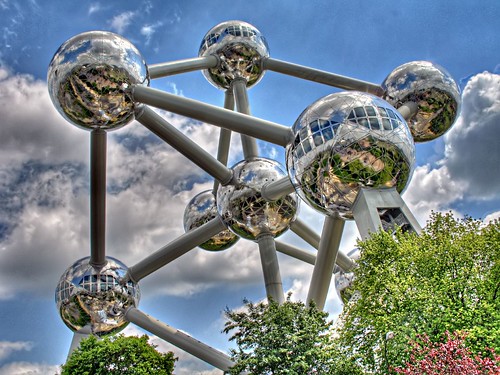
At first glance, the Atomium looks like a candidate for the World's Largest Roadside Attractions. And why not? It puts the World's Largest Baseball Bat and the World's Largest Bicycles to shame. Yet the city fathers of Brussels would hasten to tell you that, far from being an example of kitsch, the Atomium is a lasting symbol of the 1958 Brussels World's Fair and Belgium's answer to the Eiffel Tower or the Statue of Liberty. Tastes obviously differ regarding the aesthetic appeal of a giant molecule. Still, the Atomium is an impressive structure when viewed from close up. It stands 332 feet (102 meters) high and consists of nine spheres of 59 feet (18 m) diameter connected by tubes measuring 94 feet (29 m) in length and 10 feet (3 m) thick. Escalators connect the spheres, most of which contain science exhibits. An elevator (said to be Europe's fastest) leads to an observation gallery and restaurant in the topmost atom.


Twitter Delicious Facebook Digg Stumbleupon Favorites More

 
Design by Free WordPress Themes | Bloggerized by Lasantha - Premium Blogger Themes | GreenGeeks Review