Thursday, October 7, 2010

World's Scariest Bridges (part 2)

From sky-high suspension bridges to dilapidated rope bridges, these crossings aren’t for the meek.


11. Sidu River Bridge, China


When this bridge opened in November 2009, it was the world’s highest bridge, rising more than 1,500 feet in the air. The span is so high that Shanghai’s Oriental Pearl Tower could fit underneath it.
Where: High above a river gorge in China’s Hubei Province
Stats: There are 1,550 feet from the bridge’s roadway to the valley floor.

12. Seven Mile Bridge, Florida

Besides being seven miles long, the bridge itself doesn’t seem that scary. But its position in the Florida Keys makes it a prime target for the region’s many hurricanes. In fact, the current bridge is the second iteration. The newer bridge scrapped the swing span concept of the original in lieu of a sturdier 65-foot-high arch to allow boats to pass by. While it may be sturdier, we still wouldn’t want to be on it during a storm.
Where: The Florida Keys, connecting the Middle and Lower Keys.
Stats: 7 miles long; 65 feet high

13. U Pain Bridge, Myanmar

With no handrails, you’ll want to be extra careful crossing this bridge, especially in the dry season—there’s no lake below to soften the fall. And it’s not exactly brand-new; this 3/4-mile-long teak bridge was built more than 200 years ago. More than 1,000 wooden posts (read: logs)—with roughly four or five feet between each—hold it up.
Where: In Mandalay, connecting opposite banks of Taungthaman Lake
Stats: 3/4 miles long; 15 feet high.

14. Deception Pass Bridge, Washington

If the drive over this foggy strait in the Puget Sound isn't particularly scary to you, try walking over the narrow pedestrian lane at the edge of the bridge. That's where you'll find especially hair-raising views of the rushing water directly below.
Where: Connecting Whidbey Island and Fidalgo Island, in Deception Pass State Park.
Stats: Combined, the two spans are 1,486 feet in length; 180 feet above the water.


15. Iya Valley Vine Bridges, Japan

This remote region on Shikoku, Japan’s smallest island, is home to three vine bridges. The originals were built with slats of wood placed between 7 and 12 inches apart, secured in place with two single vines. While the new bridges are reinforced with wire and hand rails, they’re still not for the faint of heart.
Where: Tokushima, over the Iya-gawa River
Stats: 148 feet long; 46 feet high.


16. Captain William Moore Bridge, Alaska

True, earthquakes don’t happen all the time, but this bridge isn’t where you want to be during one: it crosses an active earthquake fault. Engineers, aware of the potential for disaster, anchored only one end of the bridge securely, so when the ground below shifts, the bridge isn’t torn apart. Still too terrifying? Take the White Pass & Yukon train route, which passes by the bridge.
Where: Along the South Klondike Highway near Skagway
Stats: 110-foot-long cantilever bridge built in 1901


17. Cikurutug Bridge, Indonesia

Most of the three-hour trip on the Argo Gede train is packed with gorgeous views of green mountains and river valleys. But the ride turns from scenic to scary once you get to the Cikurutug Bridge, where the train slid off its tracks in 2002. Though nobody was hurt, authorities have elevated security precautions to protect their passenger’s safety since the accident.
Where: On the Argo Gede train from Jakarta’s Gambir station to Bandung
Stats: About 200 feet above the valley floor.


18. Canopy Walk, Ghana

These footbridges soar above the forest floor in Ghana’s Kakum National Park. Sure, there are hand rails and net walls that rise up on either side of you—about three-and-a-half to four feet high, anyway—but you’re still walking on a plank of wood no more than one foot wide. Oh yes, and you’re 100 feet off the forest floor.
Where: Kakum National Park
Stats: 1,000 feet long; 100 feet high.


19. Lake Pontchartrain Causeway, Louisiana

This bridge rises just 16 feet above the waters of Lake Pontchartrain, but the real fear factor is that it never seems to end—it spans nearly 24 miles from Metairie to Mandeville, LA. (Once you reach roughly the eight-mile mark, say goodbye to land visibility.)
Where: Across Lake Pontchartrain between the towns of Metairie and Mandeville.
Stats: 24 miles long; 16 feet above water.

Friday, October 1, 2010

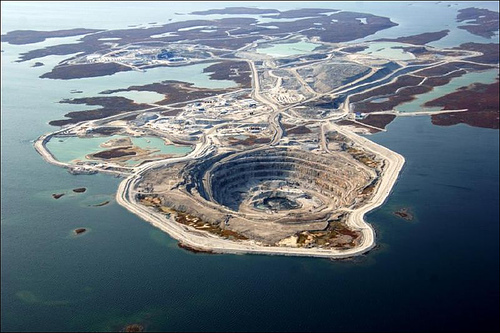
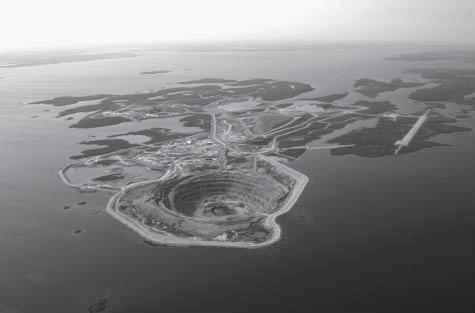
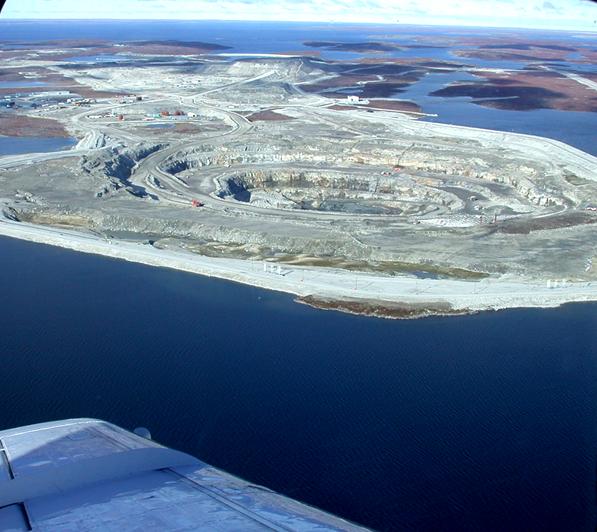
The Diavik Diamond Mine, Canada


Many of the Canadian Diamonds which we offer are manufactured using diamond rough which was sourced from the Diavik Diamond Mine which is located on a 20 kilometer square island, informally called East Island, which is in Lac de Gras located within the Northwest Territory of Canada approximately 300 kilometers as the crow flies Northeast of Yellowknife which is the Capital of Canada's Northwest Territories. The Artic Circle is located about 220 kilometers North of the mine. The key to operating a mine in Canada's remote wilderness is a private ice road which is shared by various mining companies that are operating in the area. The road has been in operation for about twenty years and must be rebuilt annually to maintain service. Approximately 75% of the road is ice and is built over frozen lakes.

Geology: The Diavik Diamond Mine was discovered in Precambrian rocks of the Slave Geological Province. Known to host deposits of gold, copper, zinc, nickel, and now diamonds, this ancient rock is among the world’s oldest and was formed about 2.7 to 2.5 billion years ago. The Slave Geological Province has produced much of the North’s mineral wealth.

Granitic rocks predominantly underlie the area, and have been intruded into slightly older meta-sedimentary rocks, originally deposited as sandstone and shale. The geology of the project area is typical of ancient, 2.5-2.7 billion-year-old Precambrian rocks, with a mixture of metamorphosed sedimentary (metaturbidites) and granitic (e.g. granite, tonalite) rocks. The kimberlite pipes at the Diavik Diamond Mine are volcanic cores injected into the much older, granitic and meta-sedimentary rocks a mere 55 million years ago. Relatively fresh, often charred – but not petrified – wood found only in China today, has been encountered in drill core at depths up to 400 metres. Reflecting a much warmer climate at that time, the coniferous trees were uprooted and incorporated into the pipes.

What are Kimberlite Pipes?

Kimberlite is a rare rock type commonly found in carrot-shaped pipes which represent the roots of ancient, small volcanoes. A drawing of a carrot shaped kimberlite pipe appears above. Originating from over 150 km below the earth’s surface where diamonds are commonly formed, the kimberlite may bring diamonds to surface. Globally, kimberlite pipes average 12 hectares in surface area, and may reach depths of several hundred metres. The kimber pipes used by the Diavik Diamond Mine range in surface area from 0.9 to 1.6 hectares, and extend below 400 metres.

The Exploration for Diamonds

Finding diamond deposits is difficult and costly. Rather than look for the elusive and rare diamonds, geologists seek other clues. Working from tent camps, geologists conduct several types of surveys. Using geochemical surveys, soil samples are taken and panned for indicator minerals like garnets found in more abundance in kimberlite pipes. A trail of indicator minerals can lead to potential pipes. In addition, geophysical surveys are used to differentiate hidden kimberlite pipes from surrounding host rock. Computer-generated geophysical data is mapped as pictured above. If a potential kimberlite target is identified, portable diamond drills are used to remove core samples to determine if the target is in fact kimberlite. Further drilling helps define pipe size and shape, and provides additional rock for diamond testing. Not all kimberlite pipes have diamonds. In fact, of the worlds estimated 5,000 kimberlites only 23 contain enough diamonds to warrant the expense of operating a mining operation. When diamonds are found in sufficient quantities to suggest an ore body, a small mining operation is conducted to remove a larger, several thousand tonne bulk sample. This sample is processed to remove the diamonds, which are then evaluated for quantity, quality, and size.

Lac de Gras

Aboriginal people named the Lake Ekati for quartz veins found in local bedrock outcrops resembling caribou fat. Lac de Gras is 60 kilometers long and averages 16 kilometers wide with a shoreline length of 740 kilometers. The lake averages 12 meters in depth and has a maximum depth of 56 meters. The water temperature ranges from 0°C to 18°C in the summer. Aquatic productivity is low due to low nutrients, low light during the winter, eight months of ice and low water temperatures. The water quality resembles distilled water. The lake is habitated by lake trout, cisco, whitefish, artic grayling, burbot, longnose sucker and slimy sculpin. The lake has a drainage area of about 4,000 square kilometers and together with Lac du Sauvage located to the Northeast form the headwaters of the Coppermine River which flows 520 kilometers from Western Lac de Gras to the Artic Ocean.

The Region

Rolling tundra surrounds the Diavik Diamond Mine. The region was originally named the “Barren Lands” by early explorers due to its lack of trees. The area includes numerous lakes, bedrock outcrops and glacial deposits of boulders, till, and eskers. What little soil is found is of cryosolic order – formed where permafrost occurs within 1-2 metres of the surface – and is characterized by layers that are disrupted, mixed, or broken, by freeze-thaw activity.

Vegetation

Vegetation includes dwarf birch, northern Labrador tea, blueberry, mountain cranberry, and bearberry, with willow, sphagnum moss, and sedge tussocks dominating wet lowlands.

Wildlife

Mammal species that inhabit the region include, grizzly bears, wolves, foxes, arctic hare, ground squirrels, and wolverines. In spring and fall, portions of the Bathurst caribou herd migrate through the region. 84 bird species and 16 mammal species are summer visitors or permanent residents.

Chronological History of the Diavik Mine

*1991- 1992 Aber stakes mineral claims
*March 1992 Exploration begins
*June 1992 Aber Resources, Kennecott Canada Exploration form Diavik joint venture
*1994-1995 Pipes A-21, A154-South, A154-North and A418 discovered
*February 1996 75-person exploration camp erected for underground bulk sampling
*July 1996 5,900 tonne bulk sampling of A418 and A154 South pipes completed
*December 1996 Diavik Diamond Mines Inc. created with head office in Yellowknife
*March 1997 Bulk sample transported over winter road to Yellowknife for processing. Approximately 21,000 carats of diamonds recovered
*June 1997 Environmental baseline studies completed
*September 1997 Pre-feasibility study completed
*March 1998 Project description submitted to Federal Government triggering formal environmental assessment review under the Canadian Environmental Assessment Act
*September 1998 Environmental Assessment Report submitted and Comprehensive Public Involvement Plan initiated
*November 1999 Federal Government approves project for permitting and licensing
*September 2000 Diavik Diamond Mines Inc. receives all necessary permits and licenses to bring mine into production
*December 2000 Investors of Rio Tinto plc and Aber Diamond Corporation approve $1.3 billion expenditure to build mine
*January 2001 Mine construction begins October 2001 A154 dike earthworks completed
*July 2002 A154 dike completed, dewatering commences
*December 2002 Mine virtually complete
*January 2003 Diamond production begins
*May 2003 First million carats
*May 2003 1.9 million accident-free hours
*April 2003 Aber’s first sale of rough diamonds
*July 2003 Rio Tinto Diamonds’ first sale of rough diamonds

Thursday, September 30, 2010

World's Scariest Bridges (part 1)

Rotting wooden planks, held aloft by rusty bits of wire, stretch out in front of you. You reach for a railing to steady yourself, but all you find are two threadbare ropes. The howling wind blows the rickety footbridge from side to side. Somewhere below you lies the forest floor—you don’t even know how far.
All bridges serve a purpose, whether utilitarian or inspirational. And some of them, like Musou Tsuribashi—this shaky, 50-year-old crossing in southern Japan—add a distinct element of fear. But you don’t have to be in a remote part of the world: scary bridges exist everywhere, in all shapes, sizes, and heights. And crossing over them can be the ultimate in adventure travel.
Surprisingly, not all of these bridges are old and dilapidated. Take the Mackinac Bridge, which connects Michigan’s Upper and Lower peninsulas. The wind here can reach speeds of 30 mph, leading to white-knuckled drives across its five-mile-long span. It can be so scary that some people simply won’t go. So the Mackinac Bridge Authority will drive your car for you…for free. In the past year, it has assisted almost 1,400 drivers—and plenty of similar programs exist around the country.
Is this an irrational fear? Not necessarily. Gephyrophobia—the fear of bridges—is an accepted psychological diagnosis. Dr. Michael R. Liebowitz, founder of the Anxiety Disorders Clinic at the New York State Psychiatric Institute, told the New York Times that the fear of crossing bridges is very common (if not as well known as, say, the fear of flying). It also “carries a stigma,” says Liebowitz, even though bridges have been known to collapse, like the interstate highway bridge in downtown Minneapolis in 2007.
But unlike gephyrophobes, many courageous (or foolhardy) travelers seek out hair-raising bridges just for the thrill. The bridges along the route to Colombia’s National Archeological Park of Tierradentro are a good example. Though there are safer routes via bus from La Plata, some thrill-seekers choose to ride motorcycles over slippery bamboo crossings deep in the mountains, where one wrong move could mean plunging into a turbulent river.
So get ready to face your fears—or maybe find your next adventure—with our list of the world’s most petrifying bridges.

1. Aiguille du Midi Bridge, France

Don’t look down. At this height, you’ll want to keep your eyes locked on the panorama of the craggy French Alps. Fortunately, the bridge itself is short, making for an easy escape if acrophobia sets in. But those truly afraid of heights probably won’t even see the bridge; getting here requires taking a cable car that climbs 9,200 vertical feet in just 20 minutes.
Where: The summit of Aiguille du Midi in the Mont Blanc massif near Chamonix.
Stats: 12,605 feet above sea level.

2. Royal Gorge Bridge, Colorado

America’s highest suspension bridge may be breathtaking for some, but those scared of heights may be left gasping for air as they stare straight down nearly 90 stories at the Arkansas River below. Completed in 1929, the bridge didn’t have stabilizing wind cables until 1982.
Where: Royal Gorge, Colorado, over the Arkansas River.
Stats: 969 feet above the gorge; 1,260 feet long.

3. Trift Suspension Bridge, Switzerland

One of the Alps’ longest and highest pedestrian suspension bridges, Trift was built in 2004 to reconnect hikers to a hut made inaccessible by a retreating glacier. A replacement in 2009 gave this bridge higher handrails and stabilizing cables to prevent it from swinging violently in the wind. But it still provides an adrenaline rush.
Where: Trift Glacier, near the town of Gadmen in the Swiss Alps.
Stats: 328 feet high; 558 feet long.

4. Carrick-a-Rede Rope Bridge, Northern Ireland

First things first: nobody has fallen off this bridge. However, many visitors who walk across simply can’t handle the return and have to go by boat. It used to be even scarier. Erected by fishermen who went to the island to catch salmon, the original bridge had only a single handrail. The rope bridge eventually became popular with tourists seeking a thrill, and the National Trust replaced it with a sturdier structure with two handrails.
Where: Near Ballintoy in County Antrim, Northern Ireland.
Stats: 65 feet long; nearly 100 feet above the rocks below.

5. Capilano Suspension Bridge, Canada

Originally built in 1889, this simple suspension footbridge surrounded by an evergreen forest is very high, fairly narrow, and extremely shaky—the cedar planks bounce on their steel cables as you walk across them. If the bridge doesn’t scare you, wait until the spring of 2011; the Cliffhanger attraction will allow visitors to climb across a series of suspended walkways attached to a cliff.
Where: North Vancouver, British Columbia, across the Capilano River.
Stats: 450 feet long; 230 feet high


6. Mackinac Bridge, Michigan

Some drivers get so nervous about crossing this five-mile-long bridge that they don’t even go. And this happens so often that the Mackinac Bridge Authority will drive your car or motorcycle for you (and for free). The biggest fear is the wind, which often exceeds 30 miles per hour on the bridge.
Where: Between Michigan’s Upper and Lower Peninsulas.
Stats: 5 miles long; 199 feet above the water.
7. Puente de Ojuela, Mexico

This bridge leads to a ghost town, but it’s the squeaky wood floor that makes it scary. Fortunately, steel cables suspended from two towers bring a greater feeling of safety. Still, steel is a relatively recent addition: when German engineer Santiago Minhguin built this bridge in the 19th century, those towers were made of wood.
Where: The ghost town of Ojuela, an old mining settlement in the northern state of Durango, Mexico.
Stats: 1,043 feet long; 2 feet wide; 360 feet above a gorge.

8. Chesapeake Bay Bridge, Maryland

Drivers are notoriously afraid of this bridge, as it’s subjected to frequent—and often violent—storms. And when the bad weather hits, forget about visibility: get to the middle of this five-mile-long bridge and you can barely see land.
Where: Spanning the Chesapeake Bay to connect Maryland’s eastern and western shores.
Stats: Nearly 5 miles long; 186 feet high at its highest point.

9. Monkey Bridges, Vietnam

It may seem that only monkeys could make it across traditional monkey bridges—after all, they’re typically made of a single bamboo log and one handrail. However, the name comes from the stooped monkey-like posture you have to maintain when crossing, so as not to plunge into the river below.
Where: Various points across the Mekong Delta at the southern tip of Vietnam.
Stats: These bridges are built by hand by local residents and vary from town to town. Newer ones are made of concrete.


Hussaini Hanging Bridge, Pakistan

Massive gaps between the planks, a wild side-to-side swing: there are reasons this is considered one of the world’s most harrowing suspension bridges. While rickety cable and wood bridges are common in this area, crossing this bridge over the rapidly flowing Hunza River is particularly frightening, as the tattered remains of the previous bridge hang by threads next to the one currently in use.
Where: In the village of Hussaini in Northern Pakistan, crossing the Hunza River.
Stats: Floodwaters reportedly submerged the bridge in May 2010. However, due to its draw as a popular adventure-travel activity, the bridge is likely to be rebuilt.

Tuesday, September 28, 2010

Top 10 The Most Expensive Homes

As new home sales have fallen to record lows, building a super luxury mansion for sale today may strike some people as risky, if not crazy, but that is not stopping ambitious developers. In high-end enclaves across the U.S., a number of residences—some of which began construction before the recession—have come to market this year with asking prices north of $20 million (and in some cases considerably more).
To identify the most expensive new constructions for sale nationwide, Businessweek.com searched listings on Realtor.com, Sotheby’s International Realty, Corcoran, and Zillow.com. Some were built on spec—or built by developers for sale on the open market, not for a client—while others were custom-built for owners who later decided to sell. The biggest price tag we found: $100 million for a mansion in Windermere, Fla. The least? An 18,886 -sq. -ft. beach house in Boca Raton, Fla. for $22 million. While it remains a buyers market, there is some positive news for sellers: The ultra rich, or those with investable assets of at least $30 million, increased their wealth by 21.5 percent last year, and investing in residential real estate has regained appeal among the wealthy, according to the "2010 World Wealth Report" by Capgemini and Merrill Lynch Wealth Management. The biggest home sale so far this year: a 2006 Bel-Air mansion called Le Belvedere, which had an original asking price of $85 million and sold for as much as $72 million (the final price was not released).

1. Windemere, Fla.

6121 Kirkstone Lane
Listing price: $100 million completed ($75 million as is)
Year built: 2011*

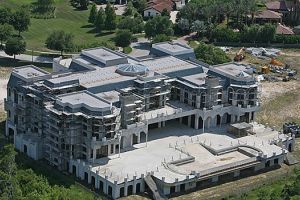
This 90,000-sq.-ft. lakefront house, originally conceived for David Siegel, chief executive of time-share company Westgate Resorts, is currently unfinished. Construction was halted on the mansion during the recession, reported wsj.com. The house is designed to have 13 bedrooms, 23 baths, a main kitchen with 10 satellite kitchens, and three swimming pools. Siegel is selling the house for $100 million completed, or unfinished for $75 million.


2. Palm Beach, Fla.

1220 South Ocean Boulevard
Listing price: $84 million
Year built: 2010

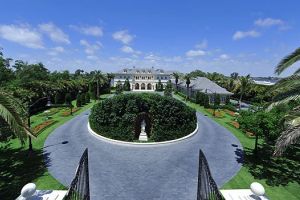
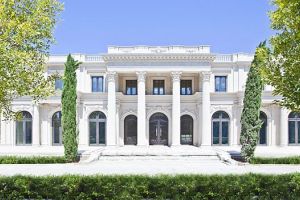
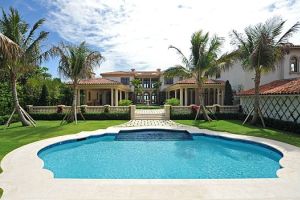
This gated French château-style home sits on 2.5 acres in one of Palm Beach’s most desirable areas, on the waterfront near the Bath & Tennis Club and Mar-A-Lago. The 27,300-sq.-ft. residence was completed this spring by Dan Swanson, president of Addison Development, and has eight en suite bedrooms, nine bathrooms, a 60-ft. pool, a separate guesthouse, and room to park 50 cars.


3. Beverly Hills, Calif.

9577 Sunset Boulevard
Listing price: $68.5 million
Year built: 2010

This enormous new residence offers about 36,000 sq. ft. of living space on nearly two acres. It has nine bedrooms, 13 bathrooms, a pool, tennis court, and gym with sauna, steam shower, and Jacuzzi. The owner, C. Frederick Wehba Sr., founder of real estate investment firm Bentley Forbes Group, spent four years and $65 million building the mansion for fund-raising events but decided to list it, according to the Los Angeles Business Journal.


4. Alpine, N.J.

1 Frick Drive
Listing price: $68 million
Year built: 2010

Richard Kurtz, chief executive of apartment management company Kamson Corp., started building this New Jersey mansion for himself and his family nearly three years ago but recently decided to move to Florida instead. Completed in July, this new estate features 30,000 sq. ft. of interior space, including 12 bedrooms, 15 full bathrooms and four half baths, a theater, indoor basketball court, 65-ft. pool, and a tennis court. Broker Dennis McCormack says this is the third largest house in Alpine, a small town that has also been home to such celebrities as Chris Rock and Britney Spears. If the house sells for the asking price of $68 million, it would be New Jersey’s most expensive home sale ever, McCormack says.


5. Bridgehampton, N.Y.

612 Halsey Lane
Listing price: $49.5 million
Year built: 2009

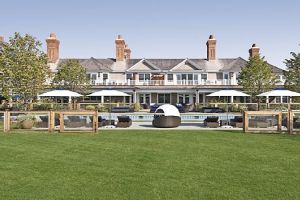
The Sandcastle estate, set on 11.5 acres, features 31,000 sq. ft. of living space on three floors, which include 12 bedrooms, 12 baths, and recreational amenities such as a pool, tennis court, skateboard half pipe, rock climbing wall, squash and racket ball court, two-lane bowling alley, full bar and disco, and a spa. It was originally built by Joe Farrell, founder of Farrell Building Co. in Bridgehampton, as his own residence, reports newsday.com, and has been rented for $500,000 per two-week stay. The asking price has been reduced from $59.5 million.


6. Palm Beach, Fla.

101 El Bravo Way
Listing Price: $47.5 million
Year Built: 2010

This Mediterranean residence, completed in the spring by Addison Development of Palm Beach, offers about 21,200 sq. ft. of living space on three floors that include nine bedrooms, eight full baths, and two half baths, according to realtor.com. The property has a swimming pool and 175 ft. of frontage on the Atlantic Ocean.


7. Santa Barbara, Calif.

East Mountain Drive Estate
Listing price: $42.5 million
Year built: 2010

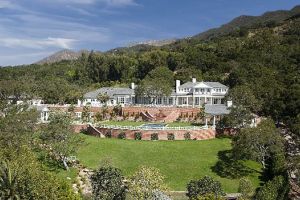
This colonial-style Montecito estate includes a six-bedroom main residence measuring 10,800 sq. ft. and a two-bedroom guest home on five acres, featuring gardens, a 56-ft. pool, koi pond, and brook, among other amenities. The grounds feature views of the Pacific Ocean.


8. Greenwich, Conn.

14 Meadow Lane
Listing price: $36.5 million
Year built: 2010

This newly built Georgian Colonial-style estate sits on 14.48 acres near the Round Hill Country Club and has 14,131 sq. ft. of living space. The property features gardens, stables with grooms' quarters, a pool and pool house, a stone gate house, and a one-mile walking path.


9. Aspen, Colo.

379 & 389 Ridge Road
Listing Price: $35 million
Year Built: 2009

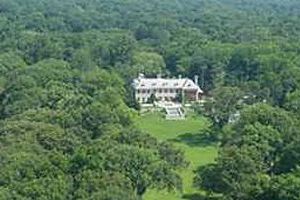
A number of costly new homes have been completed in Aspen in the past two years. This luxury compound on Ridge Road consists of two adjacent lots on more than two acres. The main home, which is 11,300 sq. ft., has five bedrooms, five full baths, three half-baths, a theater, 1,600-bottle wine room, and three-car garage. The guesthouse, which measures 4,178 sq. ft., has five bedrooms, five and a baths, and a two-car garage.

10. Santa Barbara, Calif.

780 Ashley Road
Listing price: $35 million
Year built: 2010

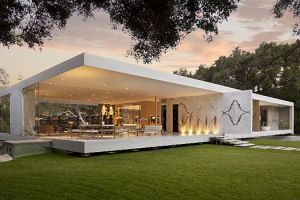
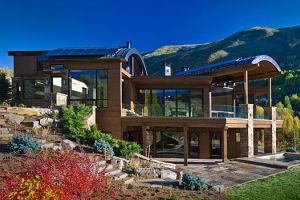
This modern residence, called the Glass Pavilion, offers nearly 14,000 sq. ft. of living space, including five bedrooms, five and a half baths, and an art gallery large enough to exhibit 32 cars. The house, set on 3.5 acres of oak groves, overlooks the surrounding mountains and woods.

Wednesday, September 8, 2010

Bizarre Beaches of the World

While the words beach vacation usually call to mind a tropical white-sand beach studded with palm trees and lapped by turquoise waters, the truth is that the world's beaches come in all shapes and sizes—some stranger than others. There are black, green, red, and even purple stretches of sand. Humans also add their own bizarre twists to the beaches of the world and have even tried to trump Mother Nature. Just look at the world's largest swimming pool (pictured below), which runs alongside a gorgeous Pacific Ocean beach in Chile. Oh, what will they think up next?

Nauthólsvík Beach
Reykjavík, Iceland

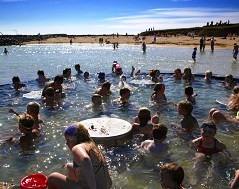
You wouldn't expect Iceland to be a swimmer's paradise. But then you probably haven't been to Nauthólsvík Beach on the southern coast of Reykjavík. While ocean temperatures this far north normally top out at a frigid 50 degrees, runoff from the capital's geothermal heating system (safely) warms the seawater of this sheltered cove to a comfortable 70 degrees in summer. If that's still too cool, for a few bucks you can steep in the two "hot pots" (pools filled with 100 degree freshwater).
Beyond the beach: Once your fingers go all pruney from your soak, rent a boat from the Siglunes Sailing Club, or refuel with carrot soup and the catch of the day at nearby Nauthóll Bistro. Spend the evening chilling out at the 56-room Hotel Borg, an elegant Art Deco beauty in Reykjavík's central square.

Crosby Beach
Crosby, England

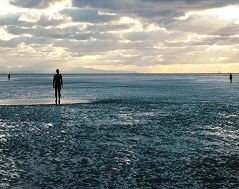
About seven miles north of Liverpool is a little coastal village called Crosby. It would be unremarkable if it weren't for the 100 anatomically correct cast-iron human figures that stand on its beach, facing out to sea. This surreal scene, called Another Place, is the work of English sculptor Antony Gormley, who used a cast of his own naked body for the installation. The statues, which were previously exhibited in Norway, Germany, and Belgium, were supposed to be shipped off to New York City in 2006, but locals fought to keep them here. Some statues are submerged when the rather large tides come in, and over the years, they've attracted barnacles and sunk into the sand. Still, it would be easy to mistake these lifelike statues for nudists watching the horizon—if it weren't for the freezing British location.
Beyond the beach: The Crosby Lakeside Adventure Centre, which includes a restaurant, bar, swimming pool, and fitness center, opened in late 2009, but the town still lacks good lodging options. Liverpool's landmark Atlantic Hotel—though a bit austere—offers outstanding views of the city's historic buildings and waterfront from its 225 rooms.


San Alfonso del Mar
Algarrobo, Chile

Seeing as San Alfonso del Mar fronts a huge beach and the Pacific Ocean, it seems an odd spot for the world's largest swimming pool. But the pool's remarkable spaciousness complements the ocean beyond rather effortlessly, and jumping in the pool's 79 degree water is a much more tempting prospect than venturing into the 63 degree seawater nearby, with its dangerous waves and currents. The resort complex on Chile's central coast resembles a modern Mayan city, with pyramidlike apartment buildings towering above the colossal saltwater pool. Well, since it's over half a mile long and holds about 66 million gallons of water, it's more like a lake. Lining the pool are white-sand beaches, palm trees, and docks for the sailboats that ply the gin-clear water.
Beyond the beach: With such a large pool to get around, it's definitely easiest to stay directly at the resort. If the mammoth lagoon doesn't keep you occupied, there's scuba diving, golf, tennis, paragliding, soccer fields, volleyball courts, a 3-D golf simulator, a full gym, a club, an open-air amphitheater, cafés, ice-cream parlors, tea shops, and an aquarium. Let's just say you won't be bored here.

Bowling Ball Beach
Mendocino County, California

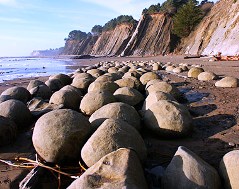
Part of Schooner Gulch State Beach, Bowling Ball Beach in northern California's Mendocino County looks like an art installation—yet it's all natural. Round boulders, roughly four to five feet in diameter, begin poking out of the water with the shifting of the tides. By the lowest ebb, the sand is covered with neat rows of these strange balls. Technically known as concretions, the hard, mineral-based spheres have resisted the endless lashing of the Pacific, while the Cenozoic mudstone that once surrounded them has eroded away to form the cliffs that line the shore. Despite the perfectly reasonable explanation, the boulders add an eerie vibe to an already otherworldly stretch of remote Californian coastline. (Note: The main trail to Bowling Ball Beach is currently closed for repairs; only experienced hikers should attempt the steeper alternate routes.)
Beyond the beach: Perched on the head of a cliff three miles up the coast, the 115-foot-high Point Arena Lighthouse is one of the tallest lighthouse towers on the West Coast. Originally built in 1870, it was destroyed in the 1906 San Francisco earthquake and rebuilt in 1907. Guests can spend the night in one of its four keeper's houses, all with fireplaces, full kitchens, and sea views.


Tropical Islands Resort
Krausnick, Germany

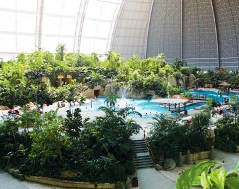
While it's assumed Germans like to travel far and wide to tropical hot spots, this wacky indoor world brings the beach vacation to them. Housed in a former airship hangar that covers the area of about eight football fields, Tropical Islands claims to be the world's largest indoor water park and the largest freestanding hall in the world (at 32 stories high, the Statue of Liberty could stand upright in it). Even in the dead of winter, you can build sand castles under palm trees on the 650-foot-long beach, take a dip in the "sea," or suntan on a lounge chair—the south-side roof is made of transparent foil. Tropical Islands also features the world's largest indoor rain forest (50,000 plants) and Germany's highest waterslide (82 feet). Oh, and did we mention the fitness center, 18-hole mini golf course, and evening magic shows?
Beyond the beach: Located about 37 miles south of Berlin and 62 miles north of Dresden, Tropical Islands is convenient to Germany's well-trodden tourist path. If you don't want to trek back to Berlin after a day at the beach, check into the 28-room Landhotel Krausnick, a simple, clean, and efficient chalet-style inn just a five-minute drive from Tropical Islands.

Repulse Bay
Hong Kong, China

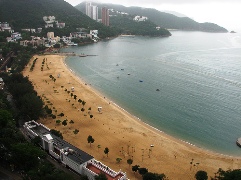
Repulse Bay Beach, an artificial strip of sand on the south side of Hong Kong Island, is one of that city's most popular beaches, and you'll know it by the throngs who pack the place on sunny summer days. Shark nets and floating platforms have been added for swimmers, and of course the needs of a nearby dragon also had to be considered during the construction of a 37-story residential building on the hillside behind the beach. Legend has it a dragon lives at the top of the mountain, and a feng shui master warned that the building would block the dragon's access to the shore. Hence, a large hole was cut out of the tower's center to mollify the dragon and avoid a whole lot of bad luck.
Beyond the beach: Repulse Bay Beach is also famous for the elaborate statues of Chinese sea goddesses at the Kwun Yam Shrine. Throw a coin into the mouth of the fish statue and receive good fortune; cross the gaudy Longevity Bridge and add three days to your life! Once you've had your fill of dragons and superstition, retire to Jia, a Philippe Starck–designed hotel in Causeway Bay that has 54 apartment-style guest rooms.

Sunday, September 5, 2010

Private Islands for Sale

The idea of owning your own island is probably a remote fantasy these days, especially after three years of economic carnage to your bank account, savings, and retirement portfolio. ut come on. It's August. Maybe you're on budget vacation, at the beach, or at a bayfront or lakefront rental. So who hasn't gazed out at an island from the shore, and wondered what it would be like to own your own kingdom, tethered to civilization only by water or air? Think Robinson Crusoe. Sir Richard Branson, Johnny Depp, and Celine Dion all own their own islands.

1. Ram Island

Place: Machias Bay, Maine, 50 miles east of Bar Harbor
Asking Price: $595,000
Acreage: 16
Undeveloped


One tree, a few sheep, a 20 by 20 foot platform for pitching a tent, and a mooring in the cove. The rest is grass, rocks, and 360-degree views of the ocean and bay.

Where: Lake Manitou in Northern Indiana
Asking Price: $775,000
Acreage: 1.25
Developed


Located halfway between Notre Dame and Purdue universities, this island on a 775-acre natural lake is a state-protected wetland. It features a one-bedroom, two-bath cottage built around 1900, but fully renovated in 1985. There's electricity and running water, and three sides are all in windows. The property also includes a private pier area on the mainland for getting from the car to the boat.

Where: Near Marathon, in the Florida Keys
Asking Price: $995,000
Acreage: 0.32
Undeveloped

The turquoise-colored roofs you see in the picture are open-air sitting areas with decks, chairs, and a campfire cooking area. But the island also comes with a 38-foot houseboat, not pictured here, that sleeps 4-5 people. Great reefs nearby for snorkeling. All the seafood you can eat.

Where: On Georgian Bay, Ontario, Canada
Asking Price: $1,057,000
Acreage: 3
Developed

A two-hour drive from Toronto, this island features a two-bedroom, two-bath cottage with a glassed-in porch overlooking the water, a separate guest cabin with bathroom, hot tub built into the rock outcropping, and a boathouse with deep water mooring. Running water, electric, a septic field. And it has wireless Internet access. So you could get away from it all, but still check your e-mail, Facebook, and Twitter accounts.

Where: North Atlantic, near Bodø, Norway
Asking Price: $1,292,000 (1 million euros)
Acreage: 74 acres

Offshore retreat? Heck, this is an offshore town. The property features nine buildings including a restaurant, pub, conference center, marina, boathouses, and a hot tub. Price also includes several boats, an all-terrain vehicle for getting around the island, fishing and hunting gear, and a clay-pigeon set-up for shooting. The Gulf Stream keeps the climate here mild, despite its location in northern Norway.

Place: St. Lawrence Seaway, near Clayton, NY
Asking Price: $1,950,000
Acreage: 1.3
Developed

There are more than 1,400 islands in the Thousand Island region of upstate New York. But few of them come with a 6,500-square-foot mansion -- ten bedrooms, four bathrooms, plus a boat house and dock. About an hour-and-a-half drive from either Syracuse or Montreal.

Place: Near Abacos, Northern Bahamas
Asking Price: $1,950,000
Acreage: 25
Partially developed

Notice the lagoon that separates the west side of the island from the east. On the west side sits a studio home and a guest cabana with an electric generator. The east side is undeveloped. Marina and airstrip are a 15-minute boat ride away, on the main island of Abacos.
Place: Long Island Sound, in Guilford, Conn.
Asking Price: $2,500,000
Acreage: 0.75
Developed

Less than 2.5 hours from Manhattan, and at low tide, a short walk to the shore. The cottage has electric, city water, a septic field, and four bedrooms. The property also comes with two Boston Whalers, a Sunfish, a windsurfing vessel, and a kayak.

Place: Howe Sound, British Columbia, between Whistler and Vancouver
Asking Price: $2,950,000
Acreage: 5
Developed

A 30-minute boat ride from the city of Vancouver, this island is up for sale to developers, with an approved subdvision plan.

Place: Lake Glenville, western North Carolina
Asking Price: $3,450,000
Acreage: 4.6
Developed

Located on a 1,500-acre lake in the Southern Blue Ridge Mountains, this island has a four-bedroom, four-bathroom house hidden by the forest canopy. It features a gourmet kitchen, antique pine floors, and covered decks that lead to a private dock. Asheville is an hour away. Atlanta is about a two-and-a-half-hour drive away.

Place: Patuxent River, near Solomons, Maryland
Asking Price: $3,500,000
Acreage: 4.5
Developed

It has a 2,500-square-foot, three-bedroom, two-bathroom main house, with pool and hot tub. Then there's a 1,400-square-foot guest cottage. Finally, a two-story observatory tower built to resemble a lighthouse, with a kitchenette, shower, and spa. The island is connected to the mainland by a gated wooden bridge. The Patuxent River meets the Chesapeake Bay four miles to the east.

Twitter Delicious Facebook Digg Stumbleupon Favorites More

 
Design by Free WordPress Themes | Bloggerized by Lasantha - Premium Blogger Themes | GreenGeeks Review