2:04 PM
 crkota


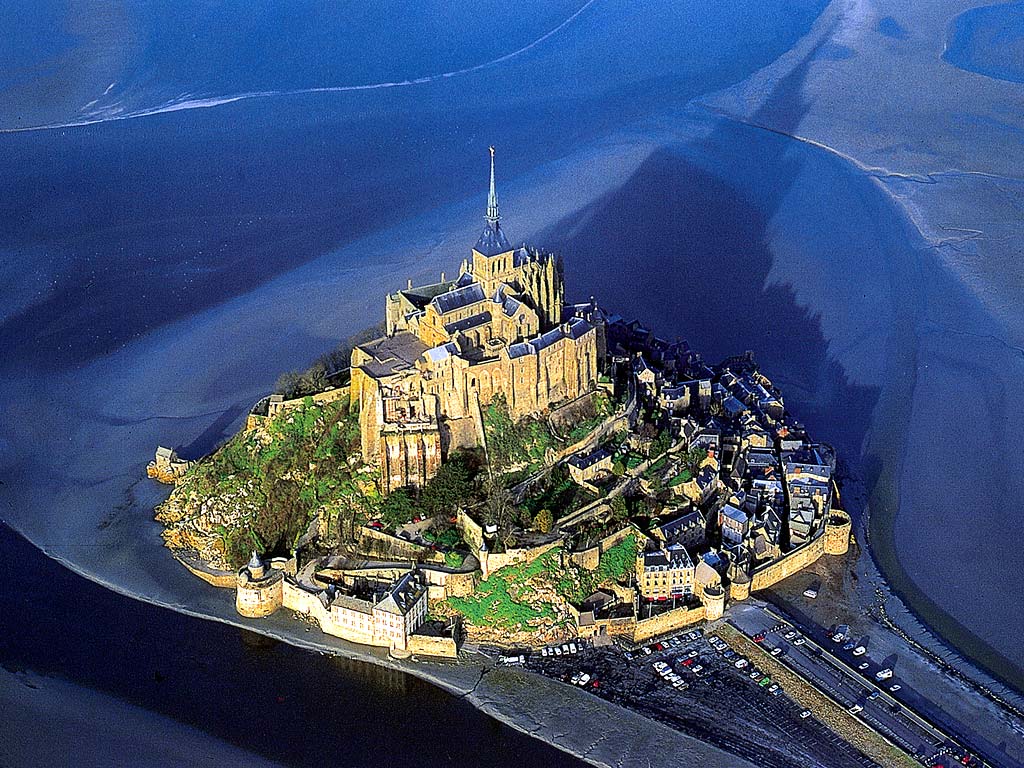


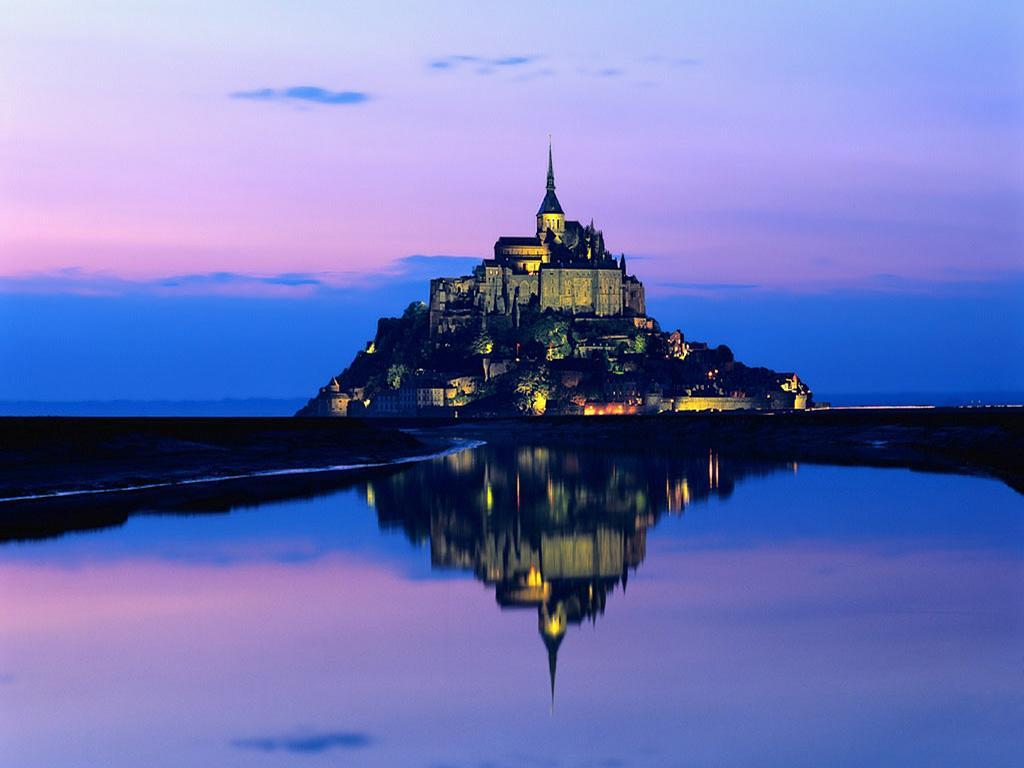
The slender towers and sky-scraping turrets of the abbey of Mont St-Michel are one of the classic images of northern France. Rising from flat white sands, the abbey sits atop a small island encircled by stout ramparts and battlements, connected to the mainland by an old causeway. Legend has it that the abbey was founded in the 8th century, when Aubert, the bishop of Avranches, was visited by the Archangel Michael in a dream; to this day the abbey is still crowned by a gilded copper statue of Michael slaying a dragon, symbolising the triumph of good over evil.
The bay around Mont St-Michel is famed for its extraordinary tides. Depending on the season and the gravitational pull of the moon, the difference between low and high tides can reach 15m, although the Mont is only completely surrounded by the sea during seasonal equinoxes. Regardless of the time of year, the waters sweep in at an astonishing rate; at low tide the Mont can be surrounded by bare sand for miles around, but at high tide, barely six hours later, the whole bay is often entirely submerged by the sea.
There are a few expensive hotels around the base of the Mont itself, but most people choose to stay at Beauvoir, right opposite the Mont, or Pontorson, about 5 miles inland from the bay. Unsurprisingly, for one of France’s top tourist attractions, the Mont is always packed with coach tours and bellowing kids at the start of the day – you’ll enjoy a much quieter visit if you turn up in late afternoon.
Rocky islet and famous sanctuary in Manche département, Basse-Normandie région, off the coast of Normandy, France. It lies 41 miles (66 km) north of Rennes and 32 miles (52 km) east of Saint-Malo. Around its base are medieval walls and towers above which rise the clustered buildings of the village with the ancient abbey crowning the mount. One of the more popular tourist attractions in France, Mont-Saint-Michel was designated a UNESCO World Heritage site in 1979.
Mont-Saint-Michel is almost circular (about 3,000 feet [900 metres] in circumference) and consists of a granite outcrop rising sharply (to 256 feet [78 metres]) out of Mont-Saint-Michel Bay (between Brittany and Normandy). Most of the time it is surrounded by vast sandbanks and becomes an island only when the tides are very high. Before the construction of the 3,000-foot causeway that connects the island to land, it was particularly difficult to reach because of quicksand and very fast-rising tides. The causeway, however, has become a barrier to the removal of material by the tides, resulting in higher sandbanks between the islet and the coast.
The beautiful region of Normandy France has many sites of interest: the Bayeux Tapestry, Rhone Cathedral, and the D-Day beaches, among others. Of all Normandy's outstanding sights, Mont St Michel—a UNESCO world heritage site—is the most famous. Its pyramid-like outline has become famous the world over and thousands of tourist flock each year for a Mont St. Michel tour.
Mont St Michel France is situated on a quasi-island on the Normandy coast, near Brittany. At high tide, Mont St Michel is almost entirely separated from the mainland. Only a narrow causeway, constructed in the 1880s preserves a link to the coast. (A bridge to replace the causeway and allow the circulation of tidal waters in the bay is scheduled for completion in 2012.) Beware: the tide comes in quickly—"à la vitesse d'un cheval au galop" (as swiftly as a galloping horse), as Victor Hugo claimed—many tourists have drowned attempting to cross the sandy bay.
Unlike other castles in France, which began as defensive structures (i.e., Carcassonne Castle) or pleasure palaces (i.e., Chenonceau Castle), Mont St Michel had its beginnings as a monastery. There has been a Christian shrine on the site since the eighth century and the first church was completed in 1144. By the thirteenth century, hundreds of Benedictine monks lived in the sturdy structures on Mont St Michel. They held out against the English when most of western France fell during the Hundred Years War.
The graceful Abbey of Mont St Michel that forms the peak of the island's structures was completed in 1521 after centuries of construction. By the seventeenth century, the influence of monasteries was on the wane and by the time of the French Revolution Mont St Michel France was being used as a prison. Like other castles in France, Mont St Michel was falling into disrepair by the late nineteenthcentury. A thorough renovation was begun in 1873. The next few decades saw the construction of the causeway forming a permanent connection to the mainland and the heightening of the abbey's steeple—it is now over 500 feet above sea level.
Today, Mont St Michel attracts over four million visitors a year, far more than most castles in France, making it one of the most popular things to do on a France vacation. The buildings are is open year-round. Admission is about $10 each ($25 for the four museums), but a guided Mont St. Michel tour is highly recommended (about $10 extra). A Mont St. Michel tour visits several otherwise inaccessible towers and rooms. If your French is up to par, there is a guided Mont St. Michel tour every half hour. English speakers should look for the twice-daily English-language tour (more in high season).
The little town of Mont St Michel France is spread around the bottom of the island outside the religious structures. There are several good hotels and restaurants around the island. There is something peculiarly romantic about spending a night on a rock cut off from the mainland, although the place is somewhat crowded in summertime.
Mont St Michel France has been described as the Merveille de l'Occident (wonder of the Western world). It is easy to see why.


The bay around Mont St-Michel is famed for its extraordinary tides. Depending on the season and the gravitational pull of the moon, the difference between low and high tides can reach 15m, although the Mont is only completely surrounded by the sea during seasonal equinoxes. Regardless of the time of year, the waters sweep in at an astonishing rate; at low tide the Mont can be surrounded by bare sand for miles around, but at high tide, barely six hours later, the whole bay is often entirely submerged by the sea.
There are a few expensive hotels around the base of the Mont itself, but most people choose to stay at Beauvoir, right opposite the Mont, or Pontorson, about 5 miles inland from the bay. Unsurprisingly, for one of France’s top tourist attractions, the Mont is always packed with coach tours and bellowing kids at the start of the day – you’ll enjoy a much quieter visit if you turn up in late afternoon.
Rocky islet and famous sanctuary in Manche département, Basse-Normandie région, off the coast of Normandy, France. It lies 41 miles (66 km) north of Rennes and 32 miles (52 km) east of Saint-Malo. Around its base are medieval walls and towers above which rise the clustered buildings of the village with the ancient abbey crowning the mount. One of the more popular tourist attractions in France, Mont-Saint-Michel was designated a UNESCO World Heritage site in 1979.
Mont-Saint-Michel is almost circular (about 3,000 feet [900 metres] in circumference) and consists of a granite outcrop rising sharply (to 256 feet [78 metres]) out of Mont-Saint-Michel Bay (between Brittany and Normandy). Most of the time it is surrounded by vast sandbanks and becomes an island only when the tides are very high. Before the construction of the 3,000-foot causeway that connects the island to land, it was particularly difficult to reach because of quicksand and very fast-rising tides. The causeway, however, has become a barrier to the removal of material by the tides, resulting in higher sandbanks between the islet and the coast.
The beautiful region of Normandy France has many sites of interest: the Bayeux Tapestry, Rhone Cathedral, and the D-Day beaches, among others. Of all Normandy's outstanding sights, Mont St Michel—a UNESCO world heritage site—is the most famous. Its pyramid-like outline has become famous the world over and thousands of tourist flock each year for a Mont St. Michel tour.
Mont St Michel France is situated on a quasi-island on the Normandy coast, near Brittany. At high tide, Mont St Michel is almost entirely separated from the mainland. Only a narrow causeway, constructed in the 1880s preserves a link to the coast. (A bridge to replace the causeway and allow the circulation of tidal waters in the bay is scheduled for completion in 2012.) Beware: the tide comes in quickly—"à la vitesse d'un cheval au galop" (as swiftly as a galloping horse), as Victor Hugo claimed—many tourists have drowned attempting to cross the sandy bay.
Unlike other castles in France, which began as defensive structures (i.e., Carcassonne Castle) or pleasure palaces (i.e., Chenonceau Castle), Mont St Michel had its beginnings as a monastery. There has been a Christian shrine on the site since the eighth century and the first church was completed in 1144. By the thirteenth century, hundreds of Benedictine monks lived in the sturdy structures on Mont St Michel. They held out against the English when most of western France fell during the Hundred Years War.
The graceful Abbey of Mont St Michel that forms the peak of the island's structures was completed in 1521 after centuries of construction. By the seventeenth century, the influence of monasteries was on the wane and by the time of the French Revolution Mont St Michel France was being used as a prison. Like other castles in France, Mont St Michel was falling into disrepair by the late nineteenthcentury. A thorough renovation was begun in 1873. The next few decades saw the construction of the causeway forming a permanent connection to the mainland and the heightening of the abbey's steeple—it is now over 500 feet above sea level.
Today, Mont St Michel attracts over four million visitors a year, far more than most castles in France, making it one of the most popular things to do on a France vacation. The buildings are is open year-round. Admission is about $10 each ($25 for the four museums), but a guided Mont St. Michel tour is highly recommended (about $10 extra). A Mont St. Michel tour visits several otherwise inaccessible towers and rooms. If your French is up to par, there is a guided Mont St. Michel tour every half hour. English speakers should look for the twice-daily English-language tour (more in high season).
The little town of Mont St Michel France is spread around the bottom of the island outside the religious structures. There are several good hotels and restaurants around the island. There is something peculiarly romantic about spending a night on a rock cut off from the mainland, although the place is somewhat crowded in summertime.
Mont St Michel France has been described as the Merveille de l'Occident (wonder of the Western world). It is easy to see why.