Thursday, October 30, 2008

Sightseeing and interesting attractions around Puerto Rico


If you are looking for attractions and places to visit in Puerto Rico, then read on and I will present you some of the most interesting places to see on the island.
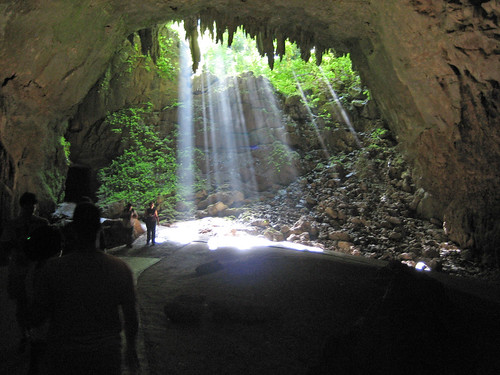
The island of Puerto Rico was blessed with many natural attractions and great spots for sightseeing. We invite you to go beyond the shore and explore it all. When you visit Puerto Rico you will find that in order for you to see all the attractions there are it will literally take you months to explore and visit them all. Whatever you are looking for in a vacation Puerto Rico has it; romance, adventure, relaxation, history, beauty, magical places and friendly locals that will make you feel right at home.
Puerto Rico is the favorite destination on the Caribbean simply because it is the most diverse island with a range of attractions and sightseeing spots in every corner of the island. Many places to visit on the coast, and the central hillside of the island. No other Caribbean island has such a variety of attractions and places to visit like Puerto Rico.
You won't run out of things to do while you visit the island of Puerto Rico; the star of the Caribbean. There are attractions and places to visit for every type of traveler. From adventurous places, to the most alluring and relaxing spots that are free of crowds. Puerto Rico is very family friendly, attractions where time seems to stand still so you can build memories to last a lifetime.
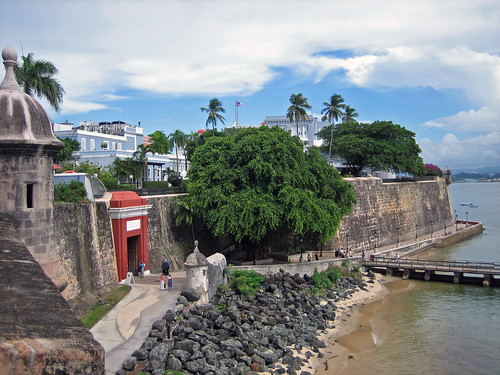
Let's go to some of the my favorite places to visit and attractions in Puerto Rico. Puerto Rico may seem small on a map, and it is when compared to many other destinations. But you will find that you will be wishing you had more time to explore the island of Puerto Rico. There are too many places to see, too many attractions and beautiful beaches to explore in a week or two. So get ready to have fun, and be ready to start blocking some time in your calendar for your next vacation to Puerto Rico. I guarantee you that once you visit this beautiful land of Puerto Rico, you will want to come again and again, and like many you may even find yourself looking for real estate so you can have a place to come and stay with friends, family and possibly retire.
If you really want to get to know Puerto Rico, transportation is a must. Get a rental car because the best of Puerto Rico is off the beaten path. Let's explore the island in more detail.
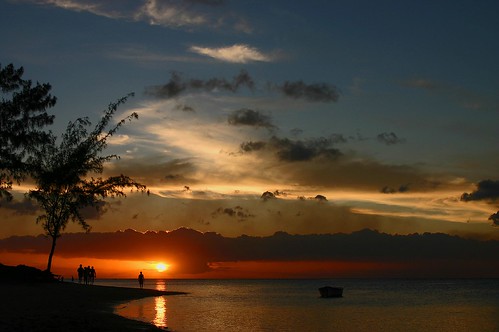
Drive off to Porta del Sol (west Puerto Rico) and you will find pristine, un-crowded beaches with breathtaking sunsets. If you enjoy surfing visit the town of Rincòn, where you will experience the best surfing on the island.
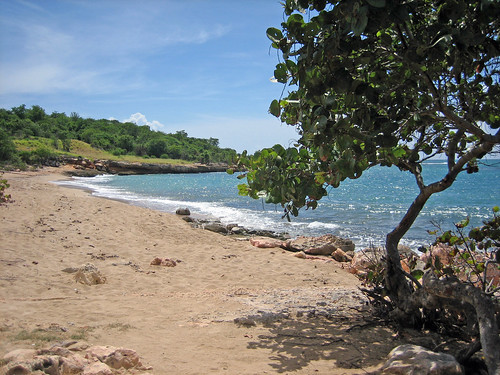
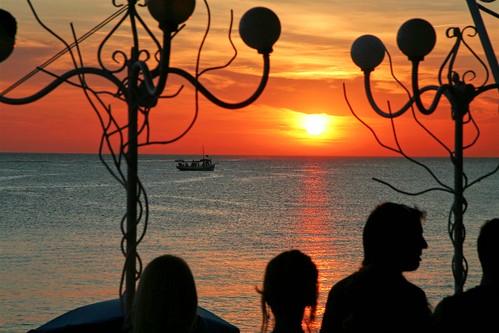
Don't leave Puerto Rico without going to the town ofCabo Rojo where you will find some of the best seafood restaurants in Puerto Rico at very affordable prices. In Cabo Rojo, you will also find some of the most scenic un-crowded beaches and the beautiful lighthouse where you can enjoy stunning vistas, and the best sunsets in Puerto Rico. Visit La Parguera in the town of Lajas where you can experience the natural wonder of bioluminescence.
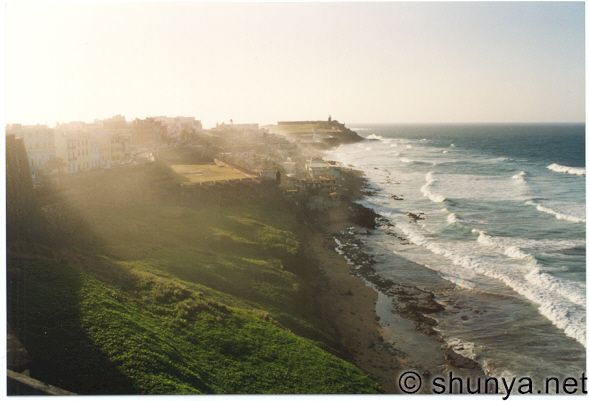
Explore the Dry Forest of Guanica, where you will find the greatest population of birds on the island and more great beaches.
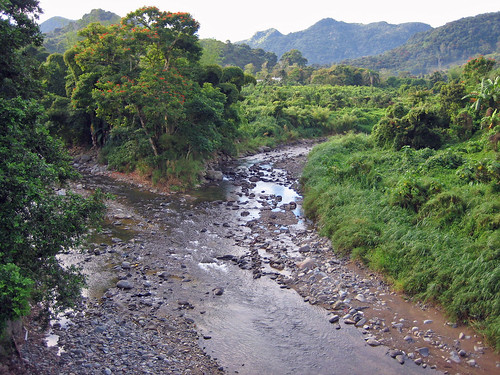
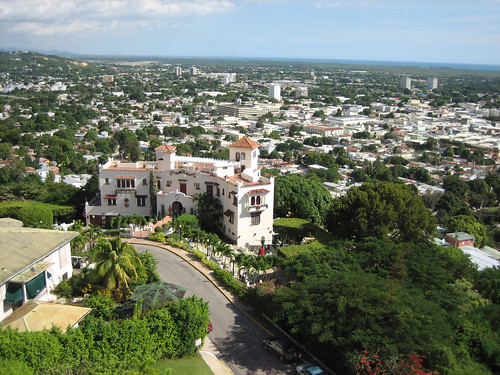
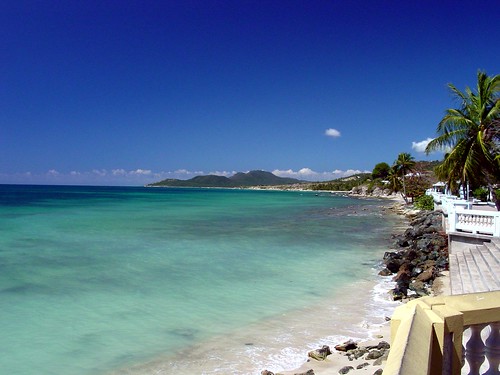
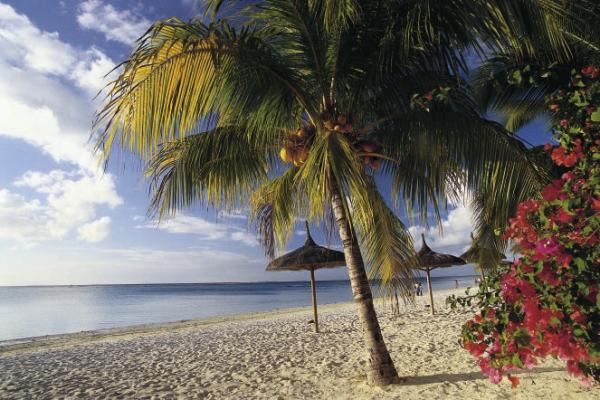
Visit the historic town of San German, where you will drive through narrow brick roads lined with old-world style Spanish homes. San German also houses the first church that was ever built in the New World. Take the scenic drive, and you will be mesmerized by the majestic mountains running through the center of the island and the breathtaking turquoise waters framed by lush, tall, green palm trees.
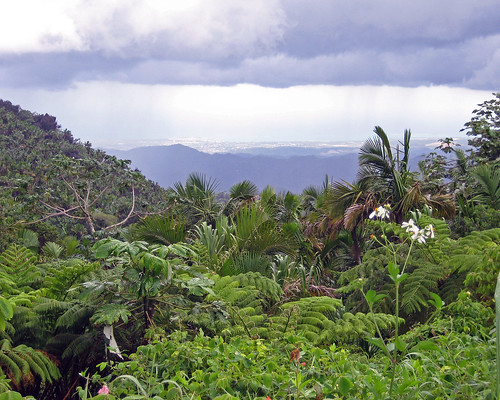
Another great destination in Puerto Rico is the island of Vieques, the new capital of weddings and honeymoons of Puerto Rico, where you will find pristine, virgin, and secluded beaches. Vieques will be the cherry on your perfect Puerto Rico vacation.
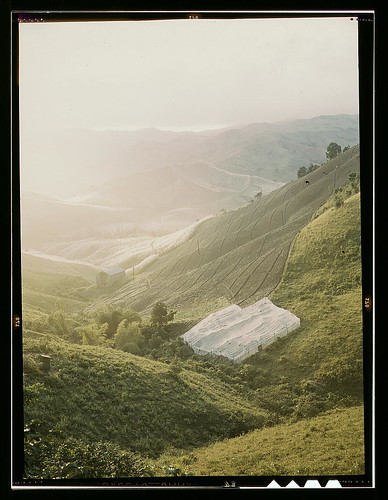
Before you leave Puerto Rico please take at least a couple of days to visit this beautiful island, it is like going back 60 years and seeing the Caribbean the way it was intended to be.
There is so much to see in Puerto Rico, you could spend years of your life exploring the beauty and diversity of the island.

Puerto Rican natives are very friendly and they will make you feel welcomed. Puerto Rico has the charm of an island and the conveniences and roads that you would find in the United States. It is very easy to get around the island. If you get lost, the helpful residents will be happy to lead you in the right direction. Helpful hint: Be ready to use landmarks as directions instead of road names.

Ready to get on the road and begin exploring? Start smiling you are on your way to Puerto Rico.

Puerto Rico


A bustling island whose shiny consumerism rubs up against an unspoiled interior.


Puerto Rico is where four centuries of Spanish Caribbean culture comes face to face with the American convenience store. This leads to some strange juxtapositions - parking lots and plazas, freeways and fountains, skyscrapers and shanties - but it's all apiece with the Caribbean's hybrid history.

Travellers who venture into the island's mountainous interior or explore its undeveloped coasts come across stately hill towns where the locals in the plaza seem to have been feeding the same pigeons for decades, and reefs where divers can see 30 species of fish in as many seconds.


Puerto Rico is a Caribbean Vacation Spot worth visiting, because it has such huge variety. As well as being able to take a top class luxury vacation in Puerto Rico. There will be the perfect Puerto Rico vacation spot for you, whether it is a Puerto Rico beach vacation or you want to go hiking in a forest, or eating top class Caribbean cuisine. You will be able to take romantic walks on beautiful beaches. Whatever you want to do you can probably do it in Puerto Rico.


Puerto Rico is easily accessible by air from North, South, and Central America so it is an excellent choice for a business reward trip, a wedding, a honeymoon or a business conference, never mind a straightforward luxury vacation.


It is just over three hours from Washington DC, over five hours from Mexico City, and twelve hours from London.
Puerto Rico has things to do and see which will please just about everybody.........

Monday, June 23, 2008

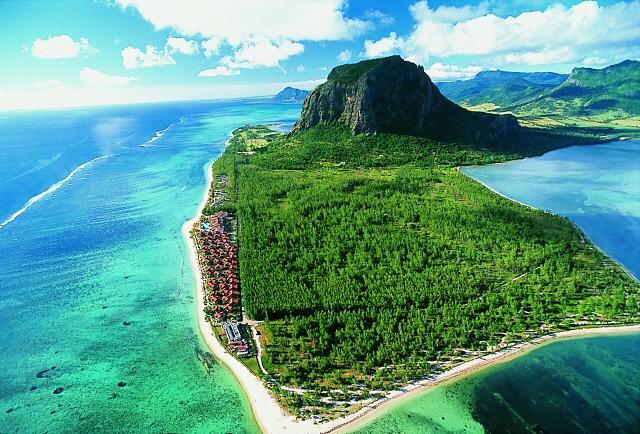
History of Mauritius


After a brief Dutch settlement, French immigrants who came in 1715 named the island ÃŽle de France and established the first road and harbor infrastructure, as well as the sugar industry, under the leadership of Gov. Mahe de Labourdonnais. Blacks from Africa and Madagascar came as slaves to work in the sugarcane fields. In 1810, the British captured the island and in 1814, by the Treaty of Paris, it was ceded to Great Britain along with its dependencies.


Indian immigration, which followed the abolition of slavery in 1835, rapidly changed the fabric of Mauritian society, and the country flourished with the increased cultivation of sugarcane. The opening of the Suez Canal in 1869 heralded the decline of Mauritius as a port of call for ships rounding the southern tip of Africa, bound for South and East Asia. The economic instability of the price of sugar, the main crop, in the first half of the 20th century brought civil unrest, then economic, administrative, and political reforms. Mauritius became independent on March 12, 1968.

The effects of Cyclone Claudette in 1979 and of falling world sugar prices in the early 1980s led the government to initiate a vigorous program of agricultural diversification and develop the processing of imported goods for the export market. The country formally broke ties with the British Crown in March 1992, becoming a republic within the Commonwealth.

In addition to sugarcane, textile production and tourism are the leading industries. Primary education is free, and Mauritius boasts one of the highest literacy rates in sub-Saharan Africa.

With a complicated ethnic mix—about 30% of the population is of African descent and the remainder is mostly of Indian descent, both Hindu and Muslim—political allegiances are organized according to class and ethnicity.

In Feb. 2002, Mauritius went through four presidents in succession. Two resigned within days of each other, each after refusing to sign a controversial anti-terrorism law that severely curtailed the rights of suspects. The law, supported by the prime minister, was ultimately signed by a third, interim president. At the end of February, a fourth president, Karl Offman, was elected by parliament.

In Oct. 2003, Paul Berenger, a white Mauritian of French ancestry, became the first non-Hindu prime minister in the history of Mauritius. Berenger and the previous prime minister, Anerood Jugnauth, formed a coalition during Sept. 2000 elections. Under their agreement, Jugnauth served as prime minister for three years and Berenger assumed the prime ministership for the remaining two years of the term. Jugnauth then became president in 2003, and in July 2005, Navin Ramgoolam, prime minister from 1995 to 2000, again assumed that office.

Thursday, June 19, 2008

Republic of Mauritius


President: Anerood Jugnauth (2003)

Prime Minister: Navin Ramgoolam (2005)

Land area: 714 sq mi (1,849 sq km);
total area: 788 sq mi (2,040 sq km)

Population (2007 est.): 1,250,882 (growth rate: 0.8%); birth rate: 15.3/1000; infant mortality rate: 14.1/1000; life expectancy: 72.9; density per sq mi: 1,752

Capital and largest city (2003 est.): Port Louis, 577,200 (metro. area), 143,800 (city proper)
Monetary unit: Mauritian rupee

Languages: English less than 1% (official), Creole 81%, Bojpoori 12%, French 3% (2000)

Ethnicity/race: Indo-Mauritian 68%, Creole 27%, Sino-Mauritian 3%, Franco-Mauritian 2%

Religions: Hindu 48%, Roman Catholic 24%, other Christian 8%, Islam 17% (2000)

Literacy rate: 86% (2003 est.)

Economic summary: GDP/PPP (2007 est.): $14.9 billion; per capita $ $11,900 . Real growth rate: 5.6%. Inflation: 8.8%. Unemployment: 8.8%. Arable land: 49%. Agriculture: sugarcane, tea, corn, potatoes, bananas, pulses; cattle, goats; fish. Labor force: 552,700; construction and industry 30%, services 25%, agriculture and fishing 9%, trade, restaurants, hotels 22%, transportation and communication 7%, finance 6% (2007). Industries: food processing (largely sugar milling), textiles, clothing, chemicals, metal products, transport equipment, nonelectrical machinery, tourism. Natural resources: arable land, fish. Exports: $2.475 billion f.o.b. (2007 est.): clothing and textiles, sugar, cut flowers, molasses. Imports: $3.627 billion f.o.b. (2007 est.): manufactured goods, capital equipment, foodstuffs, petroleum products, chemicals. Major trading partners: UK, UAE, France, U.S., Madagascar, South Africa, China, India (2006).
Member of Commonwealth of Nations

Communications: Telephones: main lines in use: 357,300 (2006); mobile cellular: 772,400 (2006). Radio broadcast stations: AM 4, FM 9, shortwave 0 (2002). Radios: 420,000 (1997). Television broadcast stations: 2 (plus several repeaters) (1997). Televisions: 258,000 (1997). Internet Service Providers (ISPs): 9,792 (2007). Internet users: 182,000 (2006).

Transportation: Railways: 0 km. Highways: total: 2,020 km; paved: 2,020 km (including 75 km of expressways) (2005). Ports and harbors: Port Louis. Airports: 5 (2007).

International disputes: Mauritius claims the Chagos Archipelago (UK-administered British Indian Ocean Territory), and its former inhabitants, who reside chiefly in Mauritius, but were granted UK citizenship and the right to repatriation in 2001; claims French-administered Tromelin Island.

text taken from infoplease

Saturday, June 14, 2008

Atomium - Brussels


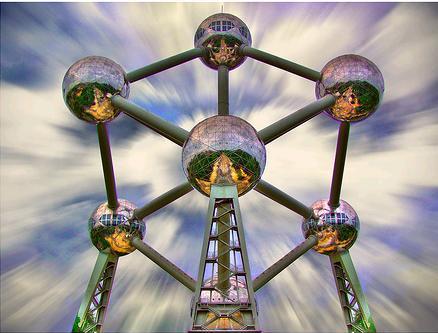
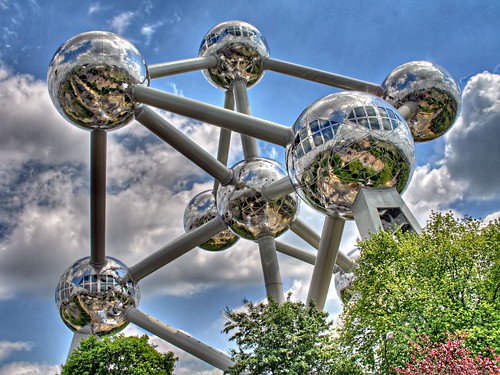
At first glance, the Atomium looks like a candidate for the World's Largest Roadside Attractions. And why not? It puts the World's Largest Baseball Bat and the World's Largest Bicycles to shame. Yet the city fathers of Brussels would hasten to tell you that, far from being an example of kitsch, the Atomium is a lasting symbol of the 1958 Brussels World's Fair and Belgium's answer to the Eiffel Tower or the Statue of Liberty. Tastes obviously differ regarding the aesthetic appeal of a giant molecule. Still, the Atomium is an impressive structure when viewed from close up. It stands 332 feet (102 meters) high and consists of nine spheres of 59 feet (18 m) diameter connected by tubes measuring 94 feet (29 m) in length and 10 feet (3 m) thick. Escalators connect the spheres, most of which contain science exhibits. An elevator (said to be Europe's fastest) leads to an observation gallery and restaurant in the topmost atom.


Wednesday, May 28, 2008

Nightlife on Ibiza


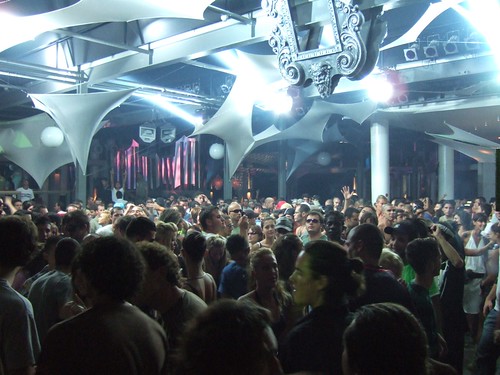
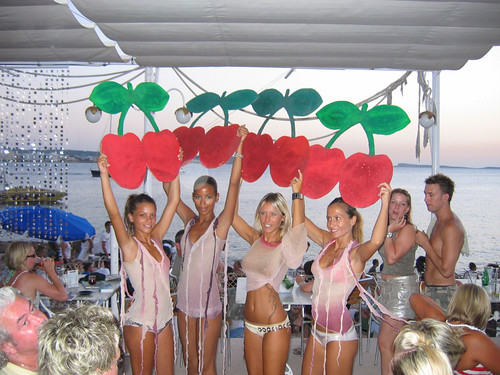
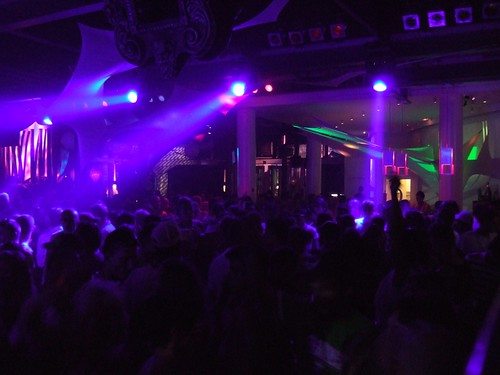
The 'super clubs' of Ibiza are renowned the world over as the global HQ of dance music, and deservedly so. Not only for their size and splendour, but mainly for the unique atmosphere created by thousands of people, fresh off the beach, letting their hair down with a holiday vengeance.

It has to be borne in mind though that these clubs pre-date the 'dance music' phenomenon by many years. Most have been around for three decades, during which time they have put on top ranking the artists of the moment down through the years and therefore every musical genre that has come and gone over this period - from the hippies onwards.


This is still the case today and will be tomorrow and more than likely forever Witness the fact that the Global room at Pacha is devoting six nights a week to perfecting the blend of Hip Hop and R&B with House music in a very effective crossover, whilst on the other side of the island Es Paradis have had 'Twice as Nice' dispensing R&B, Garage and 2-Step sounds for years. This year check out their Drum and Bass night on Sundays vs. the Old Skool spectacular 'Helter Skelter meets Innovation'.

Clubs:

Amnesia
Eden
Es Paradis
El Divino
Privilege
Pacha
Space
Love
Heaven
Xeuno


text taken from ibizaholidays

Ibiza Beaches


One of the greatest benefits of living on a tiny island like Ibiza, with over 80 beaches to choose from, is that you can select the perfect beach for the moment. Be that a special occasion, putting yourself around, or simply attaining that serene tranquility that you seek...


Then to change your mind, seek an alternative, and discover that wherever you are on Ibiza it is no more than half an hour to your chosen alternative vibe, even if it's on the other side of the island.


Wherever you are on Ibiza there will be some days when the prevailing wind will offer waves - when you planned a day of snorkelling, or a flat calm - the day after you polished your surf board.


Occasionally you wake up and look out to sea to find clouds spoiling your plans for the day on the beach, but linger a while longer and you will suss the direction of the prevailing wind, which creates the clouds by forcing the colder air upwards as it reaches the land mass of the island. It soon becomes easy to work out which beaches will still enjoy sunshine on the windward side whether you fancy waves to play in, or a sheltered cove to enjoy snorkelling with sunlight illuminating the seabed below?


Some days the skies are clear on your local beach, but the incoming wind is creating surf when you really fancied a lazy hour watching clouds vapourise from your lilo? Relax in the knowledge that it's only 30 minutes to that new dream beach you never checked out before - sometimes even less than ten minutes walk?

!!! Enjoy:) !!!


text taken from ibizaholidays

Ibiza Fiestas

3 Kings Parade - 5th January


After the excesses of Christmas & New Years Eve the childrens turn comes on the evening of the 3 Kings Day Fiesta on the 6th January with parades, fireworks and the distribution of presents and thousands of sweets to the children of Ibiza.
On the 5th the three kings (Melchor, Gasper and Baltasar) arrive in many of the towns and villages throughout Ibiza. Some arrive by boat, some on horseback, but they parade throught the streets throwing sweets out and then afterwards giving away presents.


Carnival - 1st March


Ibiza folk love fiestas - and the more the merrier. In fact they seize upon every opportunity to break out the traditional costumes and display their folk dancing talents in a display of religious fervour.
Carnival, however, is a completely different ball game incorporating none of the above elements. It is simply an excuse for the population to celebrate the end of winter with pure enjoyment, flamboyance and fun.
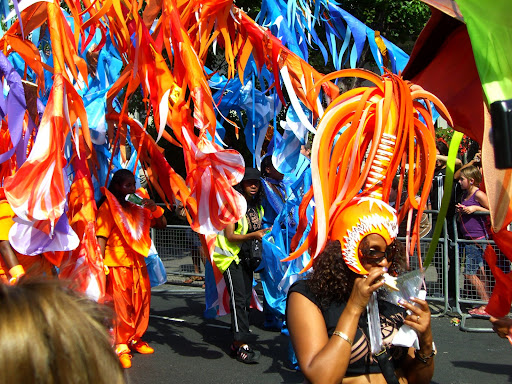
Endless pageants of glittering costumes, brilliantly decorated carriages, loud music and laughing faces are the order of the day as both adults and children display the fruits of their labours over the previous weeks - building floats, sewing costumes and practicing dance routines.
The results of all this toil are then released onto the streets in a chaotic and diverse display that often reflects the preoccupations of the islanders. Satirical digs at political characters and events are to be expected - this year's favourite was the topical 'motorway' building project currently being opposed by the majority of the population. However, all of this takes place in an atmosphere of joy and infectious exuberance that extends to the spectators, who also dress up, celebrate and dance - everyone with everybody regardless of nationality, language, colour or creed.
Laughter knows no boundaries.

Santa Eulalia - 1st Sunday in May


The first Sunday in May may seem a fairly loose date for a fiesta, in terms of dates and diaries, but this is perhaps a clue as to how far back into antiquity this fiesta dates. It is not only one of the oldest, but also one of the quaintest of the island celebrations. One of the highlights is the procession featuring beautifully preserved and with flowers decorated horse drawn carts. That's where the name Flower Festival comes from.
Nobody knows how old the tradition is, but it certainly pre-dates the town's current fortress church. Tradition has it that originally there was a small chapel atop the cliff to the north side of the bay of Santa Eulalia , which was perfectly adequate for the settlements smaller population of the day. However, one Sunday (very likely the first Sunday in May) almost immediately after the service and the departure of the worshippers, there was a loud rumble and the little church slid down the face of the cliff and into the sea. As nobody was hurt the incident was proclaimed a miracle by the hugely religious population and word of this miracle spread swiftly around the island. This prompted people from all over the island to travel to tiny Santa Eulalia each first Sunday in May to celebrate the miraculous salvation of the local worshippers and the holy place.
Bear in mind that the vast majority of the island's population travelled by horse and cart until only a few decades ago which largely accounts for the negative attitude of locals to travelling great distances, of more than a few miles, even today. Long-term residents soon seem to absorb this attitude too. Then consider that there weren't any roads to speak of - even today's roughest camino would look like a motorway to our ancient horse and cart.
But they made the effort to trek over to this fiesta on their carts and thus this Santa Eulalia celebration became the island's annual cart exhibition.
Cart processions can actually be more entertaining than one might expect. This year marks the tenth anniversary of the 'día del trueno' meaning the 'day of thunder'. It has long been a tradition to crown a fiesta with a spectacular firework display long after the sun has set - and they are indeed spectacular. However, as any proficient pyrotechnist will tell you, it is vital to test one firework from the installation long before unleashing the barrage that marks the end of the fiesta. Unfortunately on this occasion, probably due to a wiring fault (in the best of local tradition) the afternoon test firing unleashed the entire display as the horse and cart procession made its way down the main street. The noise somewhat alarmed the horses who took off in complete panic with carts and occupants in tow. Unfortunately the full effects of the firework display were invisible on such a sunny afternoon.
This misfortune was only to be bettered the following year when the town hall decided that distributing the traditional sweets from a low flying aircraft would be a novel idea. Once again fifty or more horses fled up the side streets of the village in terror.
To end on a more positive note - tradition has it that the submerged bell of the sunken church still tolls on dark and stormy nights to warn passing ships of the shallow waters near to the cliff. In recent memory this seems to have worked? Anyway, let's look forward to an eventful day out with the rest of the island - see you on the first Sunday of May.


San Juan - 24th June


One of the most loved Fiestas - this falls on June 24th, coinciding almost exactly with the summer solstice - suggesting that this festival has been around some time.
Although a Catholic holiday, it falls into the category of 'existing pagan festival' renamed as Christian 'holy-day'. This one dates back to times when churches were caves and altars were trees. But when the sun reached its summer solstice zenith everybody felt good. The trees were full of fruit, the crops were in the fields, the sea was calm for fishing and the weather was warm. People were content - much as they still are nowadays in June, as the night club opening parties compete for attention.
The main feature of this Fiesta is still the huge nocturnal bonfires the locals light to express their gratitude for being alive, and these are spectacular even nowadays. In days gone by, when light at night was practically a non-occurence, it is easy to see how these came to assume wizardly proportions in island mentality. To some extent this could explain the very 'other worldly' vibe of the village of San Juan and those who choose to live there?
The symbolic significance of the fires is that of release and renewal. All present throw something old into the fire in order to make room for the new. Different items represent different mystical messages e.g. old shoes mean that the thrower wants to walk a new path of life? Despite all of the serious magical associations, this is still a fun Fiesta if you can find a parking spot or don't mind a long walk?


El Carmen - 16th July

The Virgin of Carmen is the patron saint and protector of fishermen and sailors - those who live on and from the sea. Little surprise then that her 'saints' day is celebrated vigorously throughout Ibiza and Formentera, where the sea is almost inevitably your distant horizon.
Most churches on the island contain a statue of 'Nuestra Se-ora de Carmen' as local worshippers have great faith in her benevolent aura, which is apparently most powerfully felt at the tiny hamlet of Es Cubells on the south coast.
However, this cult only arrived on Ibiza 150 years ago with a Carmelite friar exiled by the government of the day, who were none to keen on the clergy, or their influence over the population. The friar, Father Palau, was one of Barcelona's leading intellectuals and therefore a major dissident problem for the far-left progressive government. Ibiza seemed the perfect, inaccessible backwater for their problem.
(In fact Father Palau was only here for six years before he was absolved of any political wrongdoing and returned to Barcelona.)
Nonetheless he left an indelible mark on the island during his extended sabbatical. Clearly not seeking company he chose the tiny hamlet of Es Cubells to set up home, which at that time consisted of two houses and a few farmers' outbuildings.
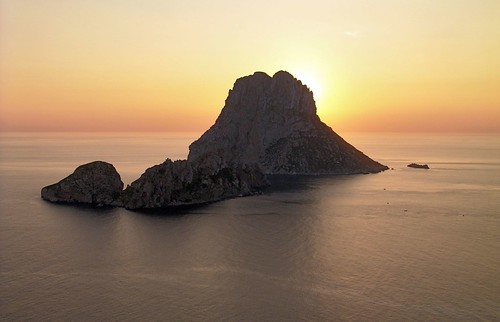
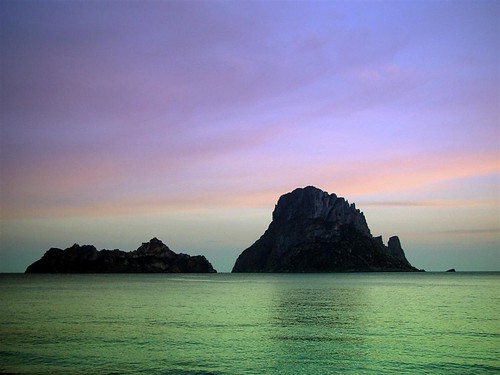
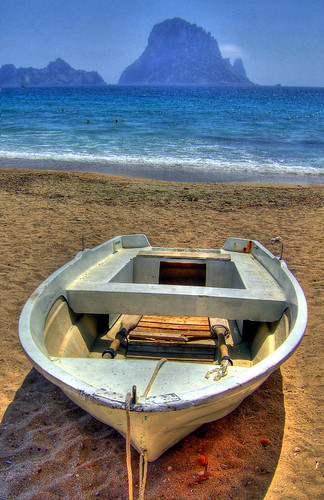
In the absence of intellectual stimulation he retreated within himself and made nature his family. This passion regularly drew him to the uninhabited. mystical island of Es Vedra where he would meditate and fast for as long as a month at a time. Surrounded and inspired by nature and nothing else he chronicled his experiences and found sufficient inner peace to return to society and build a small hermitage overlooking the sea. This was dedicated to his beloved Virgin of Carmen and, despite the risk, he arranged for his old icon of the virgin to be smuggled out to the island for the altar of his shrine.
He then set about touring Ibiza and Formentera preaching her virtues in every house of God. His sermons generated such fervour that an icon of El Carmen appeared at almost every church on the Pitiusas.
However, hordes of worshippers still chose to brave the long, rocky road to Father Palau's little hermitage at Es Cubells to best worship the Virgin, or thank her for her benevolence. This they felt was where her power was strongest, in much the same way that many people feel about nearby Es Vedra.
Nowadays the current church of Es Cubells, with its magnificent view and undeniable ambience, stands on the spot originally occupied by Father Palau's original hermitage.


Formentera - 25th July


July 25th is the Fiesta de Santiago, a national holiday throughout Spain, which has its roots way back in highly religous legend. However, in Formentera it is known as the Fiesta Sant Jaume (St. James' day) and has its roots in much more recent history. Unusually these roots have no religious connotations and pay little homage to the 'saint behind the day'. This is how it came about:-
For many centuries, since Formentera was abandoned in the 14th century during the Black Death, pirates ruled the waves around the Pitiusan islands (Ibiza & Formentera) and made Formentera too risky a place to live. Even after the Ibicenco corsairs had more or less beaten off the pirates, they were still not entirely eradicated which meant that travelling to and from Formentera was not the pleasant afternoon out that we enjoy today - it was a life and death venture.
However, during the 18th century families slowly trickled back to stake their claims on the little island and by the middle of the century there were some 200 people living there. As it happens many of those brave souls came from the Santa Eulalia area of Ibiza where, for some reason, there was an inordinately high concentration of men called Jaume (James?). For this reason many of Formentera's new settlers were called Jaume - some had Jaume for a surname too.
Late July was a relatively quiet time in the agricultural calendar and is even today. The fruit has already been harvested and the wheat has still to ripen. In addition to this the summer sea is at its calmest and most inviting for a boat trip. There was only one thing for a self respecting, sensible Ibicenco to do given this fortuitous situation - jump in a boat and pay a visit to the friends and family in Formentera? The perfect day usually selected for this visit was, of course, San Jaume and before long the spontaneous visits coalesced into an official holiday.
What a good reason for a fiesta? the re-uniting of long lost loved ones..... (church optional)

Ibiza


Ibiza, the smallest of the three Balearic Islands, attracts thousands of people from all over Europe every year. Lying near its bigger sister Mallorca, Ibiza itself is an internationally leading tourist destination. Nicknamed the capital of electronic music, Ibiza has one of the best nightlife offers of Europe with several discos, bars and night clubs which have gained international reputation particularly because of the numerous intense dance music sessions and parties held during the summer months.


Nevertheless, the island of Ibiza is internationally known not only because of its non-stop party atmosphere, but also for its cultural and natural features. A great part of the island is listed under the United Nations World Heritage Sites. The treasures underlying this land are innumerable. Inland from the coastline, the traditional scenery of many villages and remote country houses and villas has remained intact, retaining the unique character of this island.


Ibiza is also the perfect destination for those seeking to enjoy of water sports, as surf, snorkeling and scuba diving, especially after spending time on the beach during those sun-drenched days. The island has several sport facilities along its striking seashore and many tourists and locals use this great opportunity to cool themselves down when the sun is really burning.


Immerse yourself in Ibiza, its unique culture, beautiful beaches, wild nightlife and friendly people - this unforgettable island boasts with both active and relaxing options, leaving anybody out of breath. No matter what you like, Ibiza will definitely delight you.


text taken from Ibiza Travel Guide

Twitter Delicious Facebook Digg Stumbleupon Favorites More

 
Design by Free WordPress Themes | Bloggerized by Lasantha - Premium Blogger Themes | GreenGeeks Review