Showing posts with label China. Show all posts

Monday, May 14, 2012

Ningwu Ice Cave, China

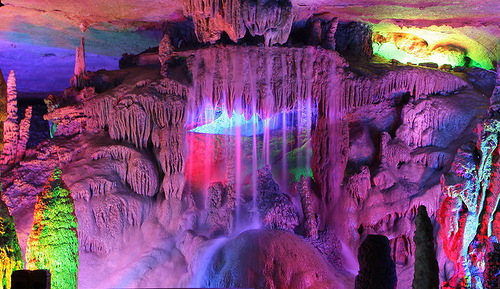
This is a sight that will really send a shiver down your spine. Not because it's scary - but because of its sheer beauty. The caves are so cold it sends a shiver down the spine of people standing outside.
The caves are, like many interesting corners of China, not yet on any tourist trail, but are spectacular to visit. Situated in the middle of the Yellow River valley, in the heart of one of China's most scenic regions, these incredible ice caves are more than three million years old. Identified by the Chinese Academy of Sciences Institute of Geology, cave expert on-site inspection: this hole is formed in the Cenozoic Quaternary Ice Age, hence the name of years the ice cave.
The experts said that only the first of nine ice cave in the ice cave ranked the country more than 10,000 caves. Divided into upper and lower five-story drill ice cave, under the ice stairs, over ice stack, available layers sightseeing. Each floor can accommodate dozens of people. Over 20 meters in diameter, the hole at its widest point, the narrowest of over 10 meters. Formed by the ice, icicles, ice curtain, frozen waterfalls, ice, ice Buddha, ice sheets, ice bell, Iceman, ice Buddha, etc., strange, to name a few. Carved inside the cave, large and small views or exquisite, dazzling crystal, or graceful, magnificent, all amazing.
Photos shows an ancient ice cave in Ningwu County of Xinzhou City, north China's Shanxi Province, 50 km west of the Wa township Ma Tei Village Office next to the travel lanes, 2300 meters above sea level. The cave, lit up by coloured lights, is more than 100 meters long. Inside it is covered with thick ice that freezes in the winter and remains all year.
Huge icicles are formed which hang from the ceiling, in sharp contrast with the green summer foliage outside.
They're so chilly that even standing outside you can feel the cold - even on a hot summer's day.




Tuesday, August 4, 2009

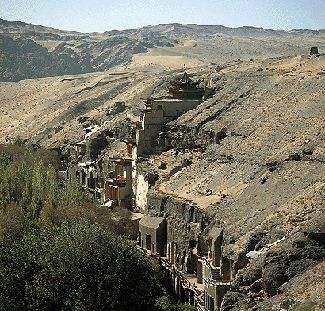
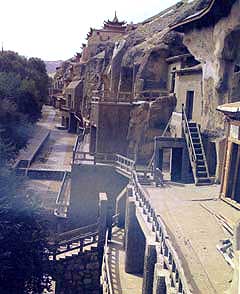
Dunhuang, China


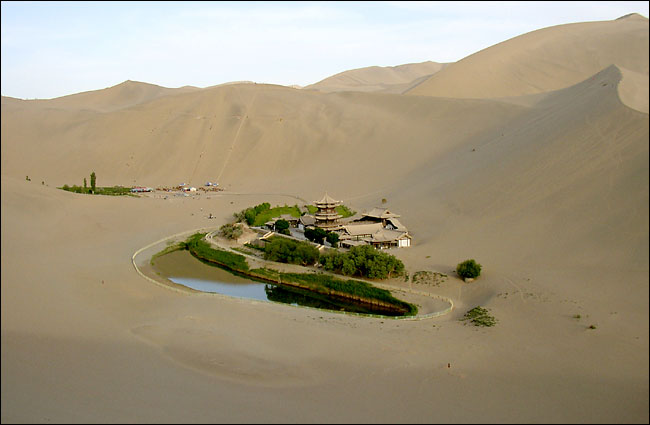
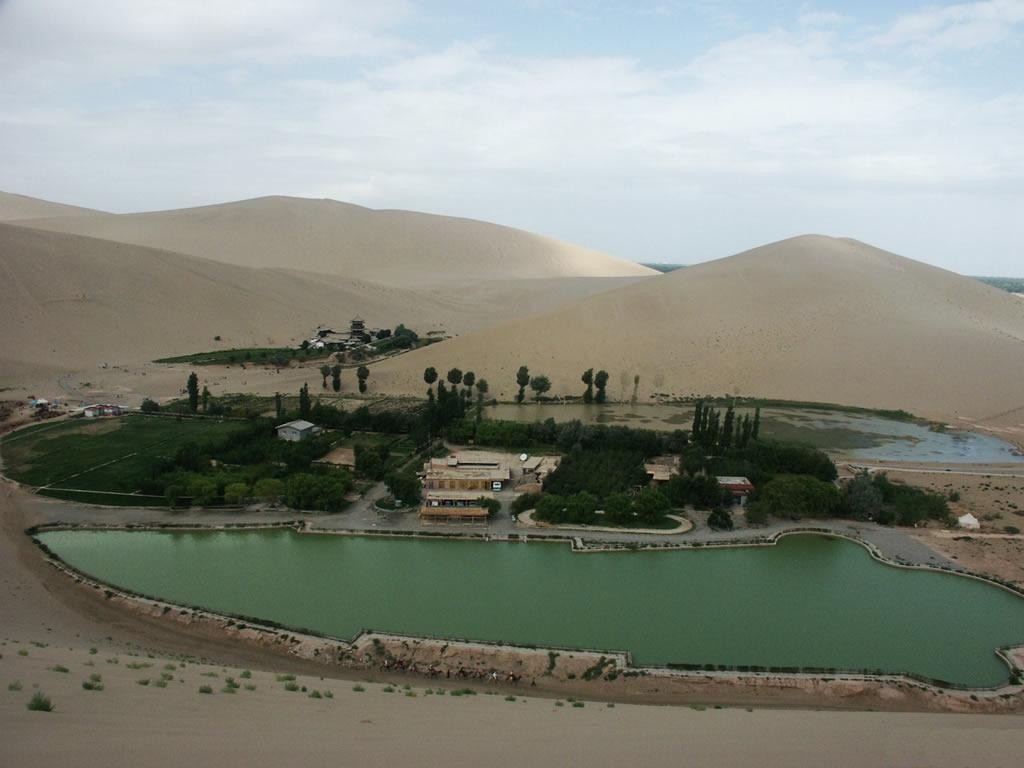
Dunhuang City is located at the west part of Hexi Corridor, Gansu Province. It was called Shazhou (sandbank) in ancient time.

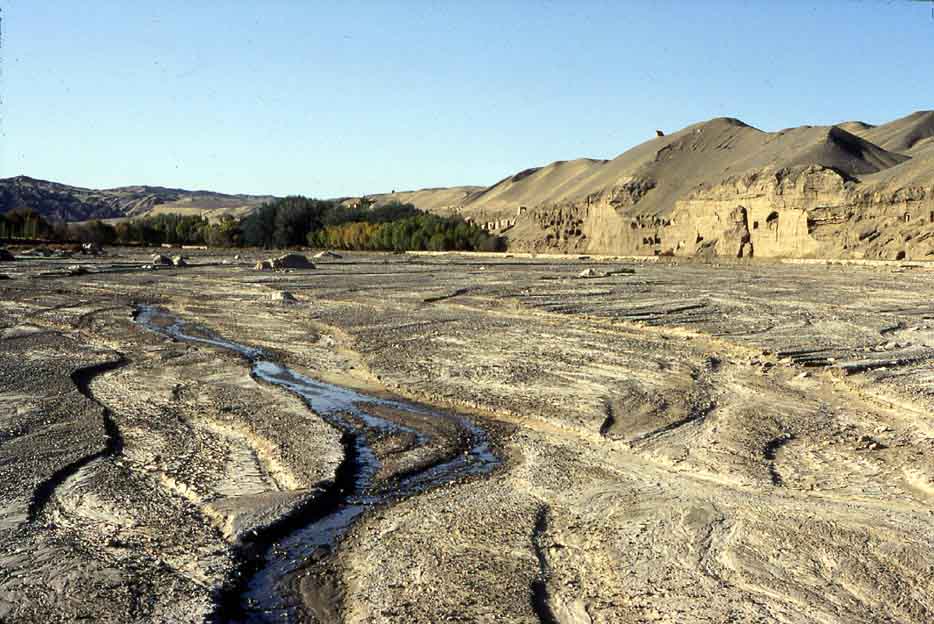
Dunhuang City is famous for its historical culture of China and an important ancient city on Silk Road in ancient time. The snow melt water of the Qilian Mountain covered with a expanse of white snow, flows into the Dang River, along which the green land has formed gradually.

When the prefecture was established here from the Han Dynasty, Dunhuang then became the hub of communication, junction of economic and cultural exchange in Gobi Desert between China and western countries and the starting point of three Silk Roads leading to Xiyu (western regions, a Han Dynasty term for the area west of Yumenguan, including what is now Xinjiang and parts of Central Asia). The silk and China invented paper of the Han Dynasty were disseminated from Dunhuang to Persia and Europe passing through desert.

The Budhism of India was spread to the Central Plains (comprising the middle and lower reaches of the Huanghe River). Being as a gate of the Central Plains, Dunhuang received monks and priests of preaching religions from the west and Chinese monks seeking Sutra to India. At that time many temples and churches were established and the cave arts were introduced from India. In Dunhuang, not only lived national minorities of China, but also foreigners from Iran and India mingled with, thus being a prosperous metropolis bustling with activities.

The caves of Mogaoku have fused Budhist arts indigenous and alien, which reflect the achievements of ancient architecture, painting and sculpture. This is the treasure-house of arts, biggest and richest in content reserved in China now. Besides, there are places of historic interest and scenic beauty like Shazhou ancient city, Great Wall built in the Han Dynasty, Yangguan ancient city and Yumen Pass etc. The traditional famous specialties are Dunhuang carpet, Ming Mountain large dates, Zhiyan peach and grape etc. The main communication of Dunhuang City is highway. It has airliner connection with Lanzhou, Xi'an and Urumqi cities.
Wednesday, July 1, 2009

Sanqingshan, China


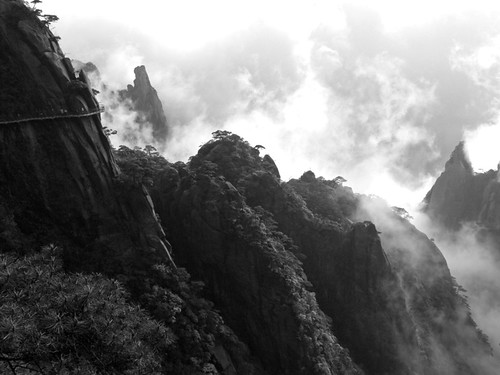
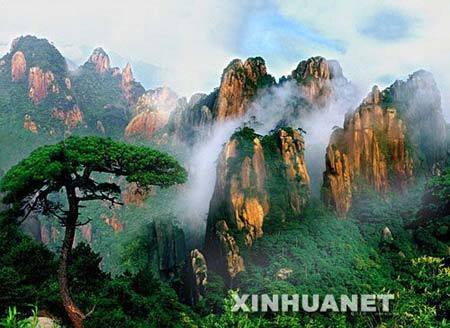
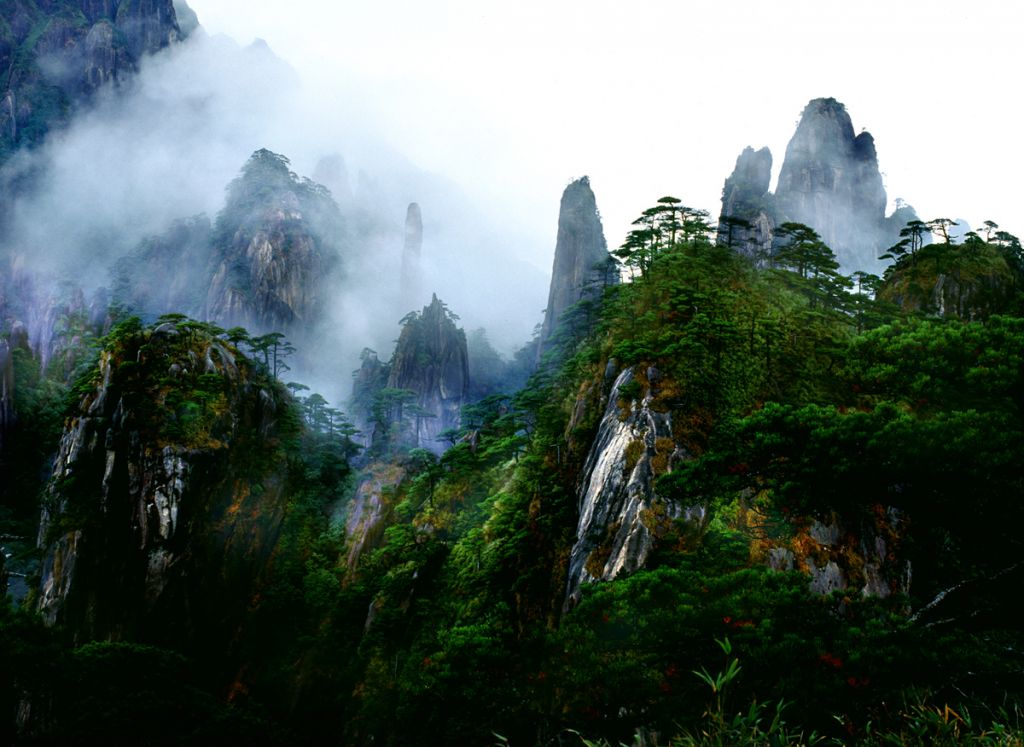
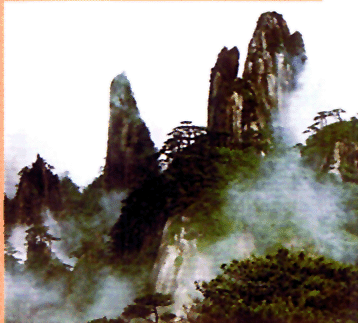
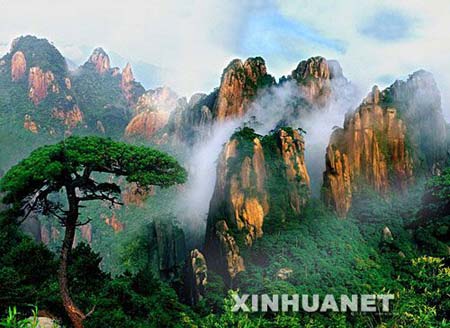
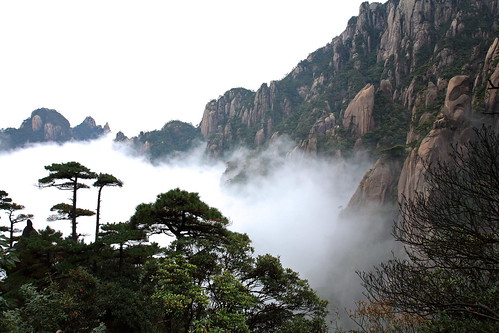
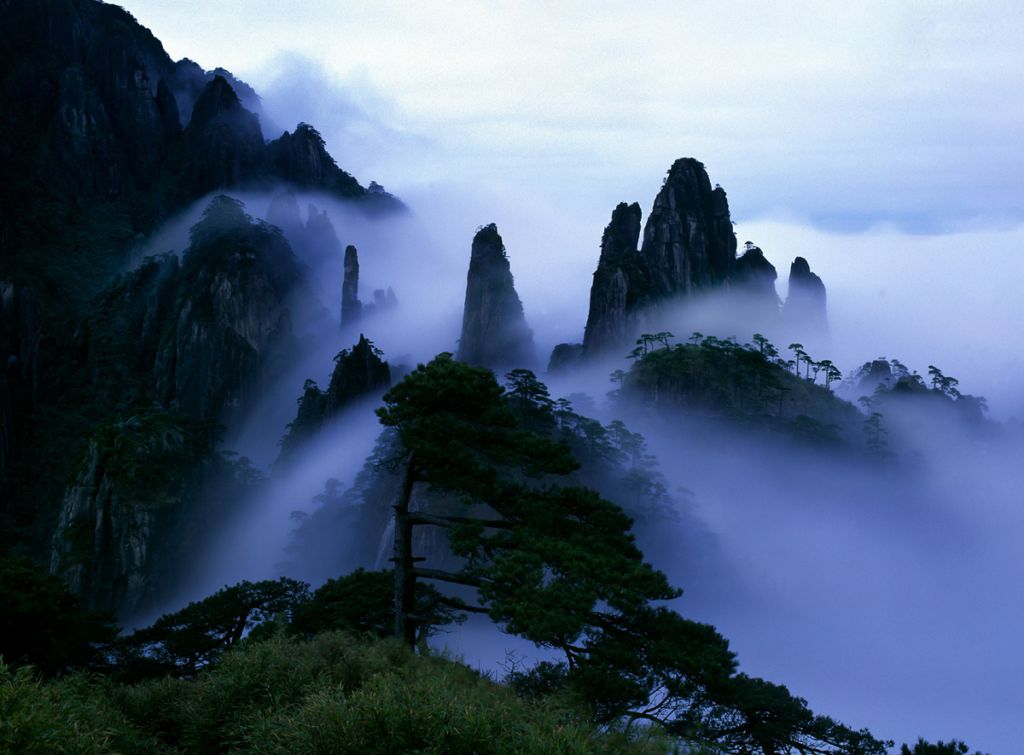
Mount Sanqingshan National Park, a 22,950 ha property located in the west of the Huyaiyu mountain range in the northeast of Jiangxi Province (in the east of central China) has been inscribed for its exceptional scenic quality, marked by the concentration of fantastically shaped pillars and peaks: 48 granite peaks and 89 granite pillars, many of which resemble human or animal silhouettes. The natural beauty of the 1,817 metre high Mount Huaiyu is further enhanced by the juxtaposition of granite features with the vegetation and particular meteorological conditions which make for an ever-changing and arresting landscape with bright halos on clouds and white rainbows. The area is subject to a combination of subtropical monsoonal and maritime influences and forms an island of temperate forest above the surrounding subtropical landscape. It also features forests and numerous waterfalls, some of them 60 metres in height, lakes and springs.

Sanqingshan is a relatively small National Park near the city of Shangrao in the Jiangxi province of China. What it lacks in size it makes up for in shear natural beauty. It is officially the 7th World Heritage Site designated in China and has been noted for its exceptional scenic attraction. The key mystique of this remarkable place is the combination of extraordinary granite geology in the form of weird outcrops and pillars combined with seasonal climate variations than often cause mists, fogs and striking sunsets. Those that have visited this place describe a feeling of overwhelming peace and tranquility. This effect is enhanced by the profusion of natural waterfalls, pools and springs. If you allow yourself, it is truly possible to see Earth, Water, Wind and Fire joined in time.
In 2008, Sanqing Mountain was listed to be the world heritage together with Fujian Tulou buildings. It is a world-famous cultural and natural mountain in China. Sanqing Mountain is the cultivation center of Taoists of different generations. Sicne Ge Yun and Ge Hong of Jin Dynasty came here, Sanqing Mountain gradually turned to be the center of Taoism believers or masters. The first man who fabricated the temple or monastery on the mountain was Wang Jian who was the leading official of Xinzhou in Tang Dynasty. At that time, Wang Jian was ordered by Emperor to manage the local people; after his retreat, he built the reclusive residence in the mountain until his death. In Song dynasty, Wang Ling, the descendant of Wang Jian donated a lot to build more temples, and then Sanqing Mountain became the center and the blessed land of Taoism. During Ming Dynasty, Wang Gu, the offspring of Wang Lin reestablished the Sanqing Palace. In total, there are more than 300 buildings have been built such as the pavilions, temples, stone carvings, gates ,bridges and so on. The whole mountain is full of the Taoist buildings. It could be equated with other famous Taoist mountains such as Qingcheng Mountain, Wudang Mountain and Longhu Mountain and so on. Hence, Sanqing Mountain is honored to be the Open-air Taoist Museum. Sanqing Mountain has rich tourist resources. Generally it could be divided into five scenic zones and in 1988, it was approved the be the national-class scenic zone in the second batch of tourist attractions application list.
The natural landscape of Sanqing Mountain is also very attractive. Its peaks are very steep and grand. It is totally different from other mountains in southern China. The plant species are also rich here. The weather conditions are also changing all the time. In Sanqing Mountain, the strange peaks are too many, the original waterfalls and the deep valleys and the floating clouds and so on give the comers the natural and cozy feeling. In the mountain there are 2373 kinds of plants, among them 68 are the rare ones and there are also 1728 wild animals. Mr. Paul, the president of Amercian National Park Fund highly spoke of this mountain that commented it as one of the perfect mountains in the world and the treasure of human beings.

source 1 2 3

Twitter Delicious Facebook Digg Stumbleupon Favorites More

 
Design by Free WordPress Themes | Bloggerized by Lasantha - Premium Blogger Themes | GreenGeeks Review